

An expert guide on navigating the complexities of interconnect design, from electrical integrity to mechanical durability in modern electronics.
In the rapidly evolving landscape of electronic manufacturing, the demand for precision-engineered components has never been higher. A custom wire to board connector serves as the critical bridge between internal circuitry and external power or signal sources. While off-the-shelf solutions often suffice for generic consumer electronics, specialized applications in automotive, medical, and industrial sectors frequently require tailored specifications that standard parts simply cannot meet. Customization allows engineers to optimize for space, power density, and environmental resilience, ensuring the long-term reliability of the final product.
Choosing to develop a custom solution involves a deep dive into the specific needs of your PCB layout and the operating conditions of your device. Whether you are dealing with high-vibration environments or extreme temperature fluctuations, every aspect of the connector—from the housing material to the contact plating—must be meticulously planned. In this comprehensive guide, we will explore the essential steps and technical considerations involved in creating a bespoke interconnect solution that aligns perfectly with your engineering objectives and manufacturing workflows.
Establishing Electrical Parameters for Your Custom Wire to Board Connector
The foundation of any successful custom wire to board connector project begins with a rigorous analysis of electrical requirements. The current rating is perhaps the most critical factor, as it dictates the size of the contacts and the gauge of the wire. In power applications, engineers must account for current derating—the phenomenon where the maximum allowable current decreases as the ambient temperature rises. Selecting a contact material with high conductivity, such as phosphor bronze or beryllium copper, is essential to minimize resistance and prevent localized overheating.
Voltage requirements and signal integrity are equally vital. For high-speed data transmission, the connector must maintain impedance control and minimize crosstalk. This often involves specific pin arrangements or the integration of shielding within the housing design. Furthermore, the dielectric withstanding voltage (DWV) and insulation resistance must be calculated based on the operating voltage of the system to prevent electrical arcing or leakage. By defining these parameters early in the design phase, you ensure that the customized component will handle the required electrical load without compromising safety or performance over the device's lifecycle.
Finally, the choice of plating plays a significant role in electrical performance. While tin plating is cost-effective for general-purpose use, gold plating is preferred for low-signal, high-reliability applications where oxidation could lead to intermittent connectivity. When customizing your connector, consider the number of mating cycles expected; gold provides superior durability and stable contact resistance over hundreds of matings, making it the gold standard for high-end industrial and medical equipment.
Optimizing Mechanical Integrity and Pitch Selection
Mechanical constraints often dictate the physical footprint of your interconnect system. When designing a custom wire to board connector, the pitch—the distance between the centers of adjacent contacts—is a primary design variable. Smaller pitches, such as 0.60mm or 1.00mm, are ideal for miniaturized handheld devices where PCB real estate is at a premium. Conversely, larger pitches like 3.96mm or 4.20mm are necessary for high-power applications where physical separation is required to handle higher voltages and larger wire gauges.
Beyond the pitch, the orientation of the connector (top entry vs. side entry) must be synchronized with the internal housing space. A customized design allows for specific locking mechanisms, such as friction locks or positive latching systems, to be integrated. Positive latches are particularly important in automotive and aerospace applications where mechanical vibration could otherwise cause the connector to dislodge. The insertion and withdrawal forces should also be calibrated to ensure that assembly workers can easily mate the components while maintaining a secure enough connection to withstand accidental tugging on the wiring harness.
Polarization and keying features are additional mechanical safeguards that can be customized. Polarization ensures that the connector can only be mated in the correct orientation, preventing accidental short circuits during assembly. Keying goes a step further by allowing the use of multiple identical connectors on the same board, with each having a unique physical "key" that prevents them from being plugged into the wrong header. These mechanical refinements significantly reduce human error during mass production and field maintenance.
Material Selection for Extreme Operating Environments
The longevity of a custom wire to board connector is largely dependent on the materials used for its housing and contacts. For the housing, high-performance thermoplastics like Liquid Crystal Polymer (LCP) or Polyamide (Nylon) are commonly used due to their excellent thermal stability and chemical resistance. LCP is particularly favored for surface mount technology (SMT) applications because it can withstand the high temperatures of lead-free reflow soldering processes without warping or outgassing. If the application involves exposure to oils, fuels, or cleaning agents, the material must be selected to resist chemical degradation.
Environmental factors such as humidity and salt spray also influence the choice of base metals and plating. In maritime or outdoor industrial environments, using a nickel underplate followed by gold or palladium-nickel plating can provide an effective barrier against corrosion. Furthermore, the operating temperature range of the application must be considered. While standard connectors might be rated for -25°C to +85°C, a custom solution can be engineered with specialized materials to operate from -40°C to +125°C or even higher for under-the-hood automotive applications.
In addition to the housing and contacts, the wire itself must be part of the customization strategy. High-flex wire with silicone insulation might be required for applications involving constant movement, while Halogen-free insulation is often a requirement for consumer electronics sold in environmentally conscious markets. By holistically considering the material properties of both the connector and the cable assembly, engineers can create a robust interconnect system that survives the harshest real-world conditions.
Streamlining Assembly with SMT and Through-Hole Customizations
How a custom wire to board connector is mounted to the PCB significantly affects both manufacturing cost and mechanical strength. SMT connectors are the preferred choice for automated, high-volume production due to their compatibility with pick-and-place machines and reflow soldering. However, for connectors that will experience significant mechanical stress—such as those frequently plugged and unplugged by the end-user—through-hole technology (THT) offers superior structural integrity. The pins pass through the PCB, creating a robust solder joint that resists shear forces better than SMT pads.
Hybrid designs are an excellent option for customization, where SMT leads are used for electrical signals while through-hole "nails" or solder tabs are added purely for mechanical reinforcement. This allows for the speed of SMT assembly without sacrificing the durability needed for heavy-duty applications. Additionally, the packaging of the connectors—whether in tape-and-reel, tray, or tube format—can be customized to fit specific automated assembly lines, further optimizing the production workflow and reducing handling time.
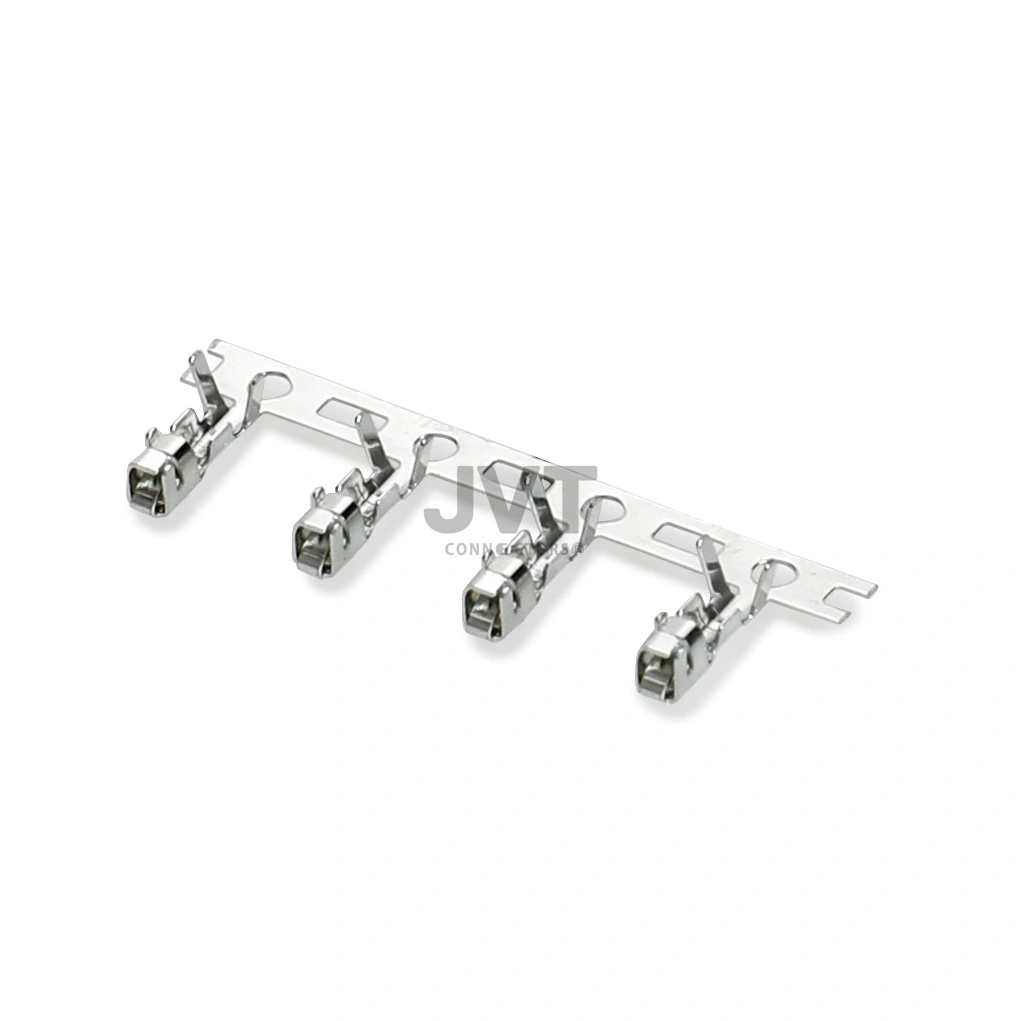
Terminal termination techniques also play a role in the customization process. While crimp-style terminals are the industry standard for their reliability and ease of repair, insulation displacement connectors (IDC) offer a faster, more automated way to terminate wires without stripping insulation. Choosing the right termination method during the design of your custom interconnect system ensures that the assembly process is as efficient as possible, ultimately lowering the total cost of ownership for the manufacturer.
Partnering with JVT Connectors for High-Performance Solutions
When it comes to sourcing a reliable custom wire to board connector, working with an experienced manufacturer like JVT Connectors is paramount. As a recognized National High-Tech Enterprise, JVT has dedicated over a decade to the research, development, and manufacturing of precision interconnect solutions. Our commitment to quality is backed by ISO 9001 and IATF 16949 certifications, ensuring that every component we produce meets the stringent demands of the global electronics market.
Our advantage lies in our comprehensive R&D capabilities and our vast product portfolio. Whether you require a custom wire to board connector for consumer 3C products or a high-durability 4.20mm pitch series for industrial power supplies, JVT provides the expertise needed to navigate the design process. We specialize in localized substitution of imported brands, offering equivalent performance with faster lead times and more competitive pricing.
Our product range includes various pitches and styles, such as the compact 1.50mm pitch series and the versatile 2.00mm pitch connectors. By leveraging JVT’s engineering support, you can optimize your designs for better signal integrity and mechanical longevity. We pride ourselves on being more than just a supplier; we are a strategic partner committed to connecting infinite possibilities for our clients worldwide.
Conclusion: The Value of a Tailored Interconnect Strategy
In conclusion, customizing a wire to board connector is a strategic decision that can significantly enhance the performance, reliability, and manufacturability of your electronic device. By carefully considering electrical parameters, mechanical constraints, and material properties, you can create a solution that is perfectly matched to your application's unique requirements. While the process requires a deep understanding of engineering principles, the resulting improvements in product quality and assembly efficiency provide a substantial return on investment.
Success in customization hinges on early collaboration between designers and manufacturers. By integrating your interconnect strategy into the initial PCB layout phase, you avoid costly redesigns and ensure that the final custom wire to board connector integrates seamlessly into your system. As technology continues to push the boundaries of what is possible, having a robust and flexible interconnect partner like JVT Connectors ensures that your innovations are always securely connected.
Frequently Asked Questions
Q1: What are the primary benefits of using a custom wire to board connector?
A custom wire to board connector allows for optimization of space, electrical performance, and mechanical durability specifically for your application. It helps in reducing assembly errors through polarization and keying, while ensuring the materials used are suitable for your specific environmental conditions, such as high temperatures or vibrations.
Q2: How do I choose the right pitch for my custom wire to board connector?
Pitch selection depends on your board space and the current/voltage requirements. Smaller pitches (1.0mm-1.5mm) are best for compact data signals, while larger pitches (3.0mm-6.35mm) are necessary for higher current power applications to ensure proper insulation and wire handling capability.
Q3: Can a custom wire to board connector withstand high-vibration environments?
Yes, by customizing the locking mechanism (using positive latches or TPA - Terminal Position Assurance) and selecting high-retention contacts, a custom wire to board connector can be engineered to maintain signal integrity even in extreme vibration scenarios found in automotive or industrial machinery.
Q4: What materials are best for the housing of a custom wire to board connector?
High-temperature thermoplastics like LCP are ideal for SMT processes, while Nylon 66 or PBT are common for through-hole connectors. The choice depends on the soldering method, required UL flame rating, and exposure to chemicals or extreme temperatures in the field.
Q5: How does plating affect the performance of a custom wire to board connector?
Plating determines the conductivity and corrosion resistance. Tin is cost-effective for static connections, while gold plating is essential for high-reliability applications with low signal levels or frequent mating cycles, as it prevents oxidation and ensures stable contact resistance.
Ready to Design Your Custom Interconnect Solution?
Contact JVT Connectors today for expert engineering support and high-quality manufacturing.