

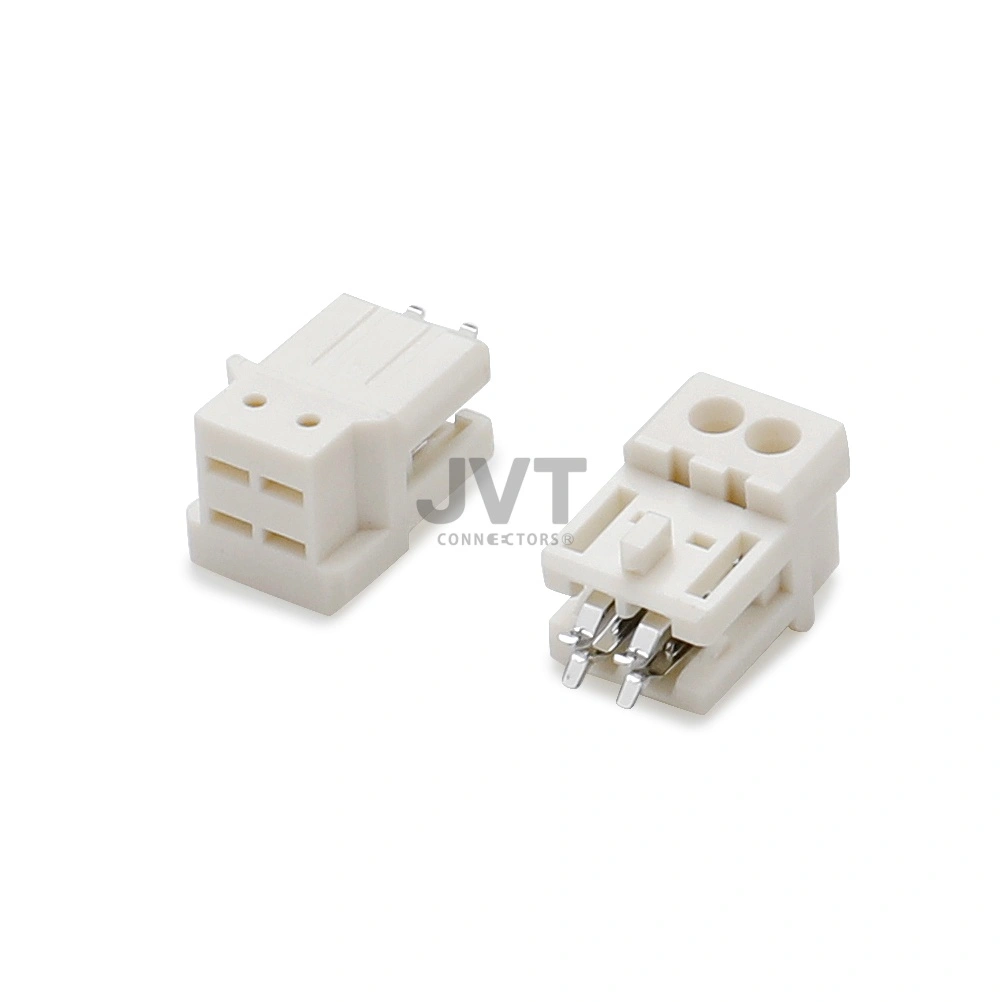
Common Applications of IDC Connectors in Electronics and Industrial Systems
An in-depth exploration of how insulation displacement technology streamlines modern manufacturing and enhances signal integrity across diverse industries.
Introduction to the IDC Connector Technology
The modern electronics landscape demands speed, precision, and reliability. At the heart of many high-speed assembly lines sits the IDC Connector, a specialized component designed to facilitate electrical connections without the traditional requirement of stripping wire insulation. This technology, known as Insulation Displacement Connection, utilizes a sharp internal blade or a V-shaped contact to pierce through the plastic shielding of a cable, making direct contact with the internal conductor. This process not only saves significant time during the manufacturing stage but also ensures a gas-tight connection that is resistant to environmental degradation. For engineers and designers, the IDC Connector represents a bridge between complexity and efficiency, allowing for high-density wiring in increasingly compact devices.
At JVT Connectors, we have spent years refining the production of these essential components. Our IDC systems are engineered to meet the rigorous demands of both consumer electronics and heavy-duty industrial machinery. By focusing on material science and precision molding, we ensure that every IDC Connector leaving our facility provides consistent performance. The integration of these connectors has become a standard practice in the development of ribbon cables and multi-wire harnesses, where individual wire stripping would be both labor-intensive and prone to human error. As we move further into an era of automated assembly, the role of the IDC Connector only grows more prominent, serving as the backbone of reliable signal transmission in thousands of applications worldwide.
Core Applications in Computing and Telecommunications
The computing industry was among the first to adopt the IDC Connector on a massive scale. Think back to the internal wiring of desktop computers; the flat ribbon cables used for hard drives (IDE/ATA interfaces) and floppy disk drives were the classic examples of IDC technology in action. Today, while interfaces have evolved, the principle remains. High-density server environments and data centers utilize various forms of the IDC Connector to manage complex internal bus systems and peripheral connections. These connectors allow for the simultaneous termination of dozens of wires, which is crucial when dealing with 40-pin or 50-pin configurations common in high-bandwidth data transmission. The consistency provided by the mechanical termination process ensures that signal skew is minimized across all conductors.
In telecommunications, reliability is non-negotiable. Telephone exchange systems and network routing hardware frequently employ the IDC Connector due to its ability to handle multiple connections within a very small footprint. Whether it is in punch-down blocks or specialized patch panels, the IDC mechanism ensures that field technicians can perform installations quickly and securely. JVT Connectors provides specialized IDC solutions that cater to these high-frequency environments, where electromagnetic interference (EMI) must be kept to a minimum. By using high-quality phosphor bronze contacts and specialized plating, our connectors maintain low contact resistance over decades of service, even in environments with fluctuating temperatures and humidity levels typical of telecom infrastructure.
Industrial Automation and Control Systems
The industrial sector presents a different set of challenges compared to consumer electronics. Here, equipment is often subjected to constant vibration, mechanical shock, and exposure to industrial oils or dust. The IDC Connector thrives in these conditions because the piercing action creates a localized cold-weld between the contact and the wire. This means the connection is physically robust and less likely to loosen compared to traditional screw terminals or simple crimp connections. In Programmable Logic Controllers (PLCs) and Distributed Control Systems (DCS), IDC technology is used to connect sensor arrays and actuator networks. The speed of deployment is a major advantage for system integrators who need to wire up massive control cabinets with thousands of individual points of failure.
Furthermore, the IDC Connector is integral to the modularity of modern industrial systems. When a machine requires a quick reconfiguration or a sensor needs replacement, the use of pre-terminated IDC harnesses allows for plug-and-play functionality. This reduces downtime and the need for specialized electrical skills on the factory floor. JVT Connectors supports the industrial revolution 4.0 by offering robust IDC products that are compatible with various pitch requirements, including 1.27mm, 2.00mm, and 2.54mm. Our commitment to quality ensures that these connectors can withstand the electrical surges and thermal cycles common in heavy manufacturing, providing a stable platform for the sensors and controllers that keep global production lines moving safely and efficiently.
Automotive Electronics and Modern Vehicle Infrastructure
As vehicles become more like mobile computers, the complexity of automotive wiring harnesses has exploded. Modern cars feature hundreds of sensors, cameras, and entertainment modules, all requiring secure data and power connections. The IDC Connector is frequently used in dashboard assemblies, lighting control modules, and internal bus systems like CAN or LIN. The ability of the IDC Connector to provide a high-density, low-profile connection makes it ideal for the cramped spaces behind a vehicle’s trim. Moreover, the weight savings achieved by using flat ribbon cables and IDC terminations contribute to the overall fuel efficiency and range of electric vehicles. Every gram saved in the wiring harness is a gram that can be allocated to battery capacity or safety features.
JVT Connectors recognizes that automotive applications require a higher standard of durability. Our automotive-grade IDC Connector solutions undergo rigorous testing for salt spray resistance, extreme temperature cycling, and long-term vibration endurance. Unlike consumer-grade alternatives, these connectors are designed with additional locking mechanisms to prevent accidental disconnection on rough roads. By integrating our IDC solutions, automotive OEMs can ensure that critical systems like airbag sensors or infotainment displays remain operational for the entire lifespan of the vehicle. The precision of our manufacturing process ensures that the "cold weld" created during the IDC termination remains intact, preventing the oxidation that often leads to intermittent electrical failures in older vehicles.
Why Choose JVT Connectors for Your Manufacturing Needs
Choosing the right supplier is just as important as choosing the right component. JVT Connectors, also known as Dongguan Qiaoye Electronics Co., Ltd., has established itself as a leader in the precision connector industry. With over a decade of experience, we specialize in providing high-quality alternatives to international brands, offering a cost-effective path to localization without sacrificing performance. Our facility is equipped with advanced automated production lines and comprehensive testing labs, ensuring that every IDC Connector meets international standards such as UL, RoHS, and REACH. We understand that in today’s competitive market, lead times and technical support are critical, which is why we offer dedicated engineering assistance to help our clients choose the perfect connector for their specific application.
Beyond our standard product lines, JVT Connectors excels in custom solutions. Whether you require a specific pitch, a unique housing material, or a pre-assembled cable harness, our team is ready to deliver. Our advantage lies in our vertical integration; we control everything from mold design and metal stamping to final assembly and quality inspection. This allows us to maintain strict quality control and offer flexible manufacturing schedules to meet the demands of fast-paced industries like 3C electronics, new energy, and medical devices. When you partner with us, you are not just buying a component; you are gaining a strategic ally dedicated to the success of your project. We invite you to learn more about our company by visiting our About Us page or browse our full range of IDC Connector products to find the right fit for your design.
Frequently Asked Questions (FAQ)
Q1: What makes the IDC Connector more efficient than crimping?
The primary advantage of the IDC Connector is the elimination of the wire stripping process. In traditional crimping, each individual wire must be stripped of its insulation before being placed into a terminal. With an IDC, the connector’s contact blades pierce the insulation automatically during the pressing process. This allows for the simultaneous termination of multiple wires, such as an entire ribbon cable, in a single mechanical action, reducing assembly time by up to 80% and minimizing the risk of damaging the internal conductor strands.
Q2: Can an IDC Connector handle power transmission or is it only for signals?
While an IDC Connector is most commonly associated with low-power signal transmission in data and control systems, specialized versions are designed for power applications. The current-carrying capacity depends on the wire gauge and the surface area of the contact points. JVT Connectors offers various pitch sizes and contact materials to accommodate different electrical loads. However, for high-current applications, it is essential to verify the specific thermal and electrical ratings of the connector to ensure safety and long-term reliability.
Q3: Is the IDC Connector reusable once it has been terminated?
Generally, an IDC Connector is considered a permanent or semi-permanent connection and is not designed for frequent re-termination. Because the contact blades deform slightly and the wire insulation is pierced, subsequent attempts to use the same part of the wire or the same connector may result in a weakened mechanical and electrical connection. In a professional manufacturing setting, if a connection needs to be changed, it is standard practice to cut the cable and use a fresh IDC Connector to ensure maximum reliability and gas-tight integrity.
Q4: What environmental factors should I consider when selecting an IDC Connector?
When selecting an IDC Connector, you must consider the operating temperature, exposure to humidity, and mechanical vibration. For harsh environments, look for connectors with high-quality housing materials like PBT and gold or tin plating on the contacts to prevent corrosion. In high-vibration scenarios, such as automotive or aerospace applications, ensure the connector system includes strain relief or locking clips. JVT Connectors provides detailed specifications for all environmental ratings to help you choose the correct component for your specific operating conditions.
Q5: How does JVT ensure the quality of every IDC Connector produced?
Quality at JVT Connectors is managed through a multi-stage inspection process. We utilize automated optical inspection (AOI) to check for molding defects, precision force sensors to verify the contact integrity, and electrical continuity testing for all cable assemblies. Our manufacturing facility is ISO certified, and we adhere to strict quality management protocols throughout the production cycle. By maintaining control over the entire supply chain, from raw materials to final packaging, we can guarantee that every IDC Connector meets the high expectations of our global clients.
For more information on our connectivity solutions or to request a quote, please visit our Contact Us page.
Explore our latest technological breakthroughs at JVT News and Articles.