

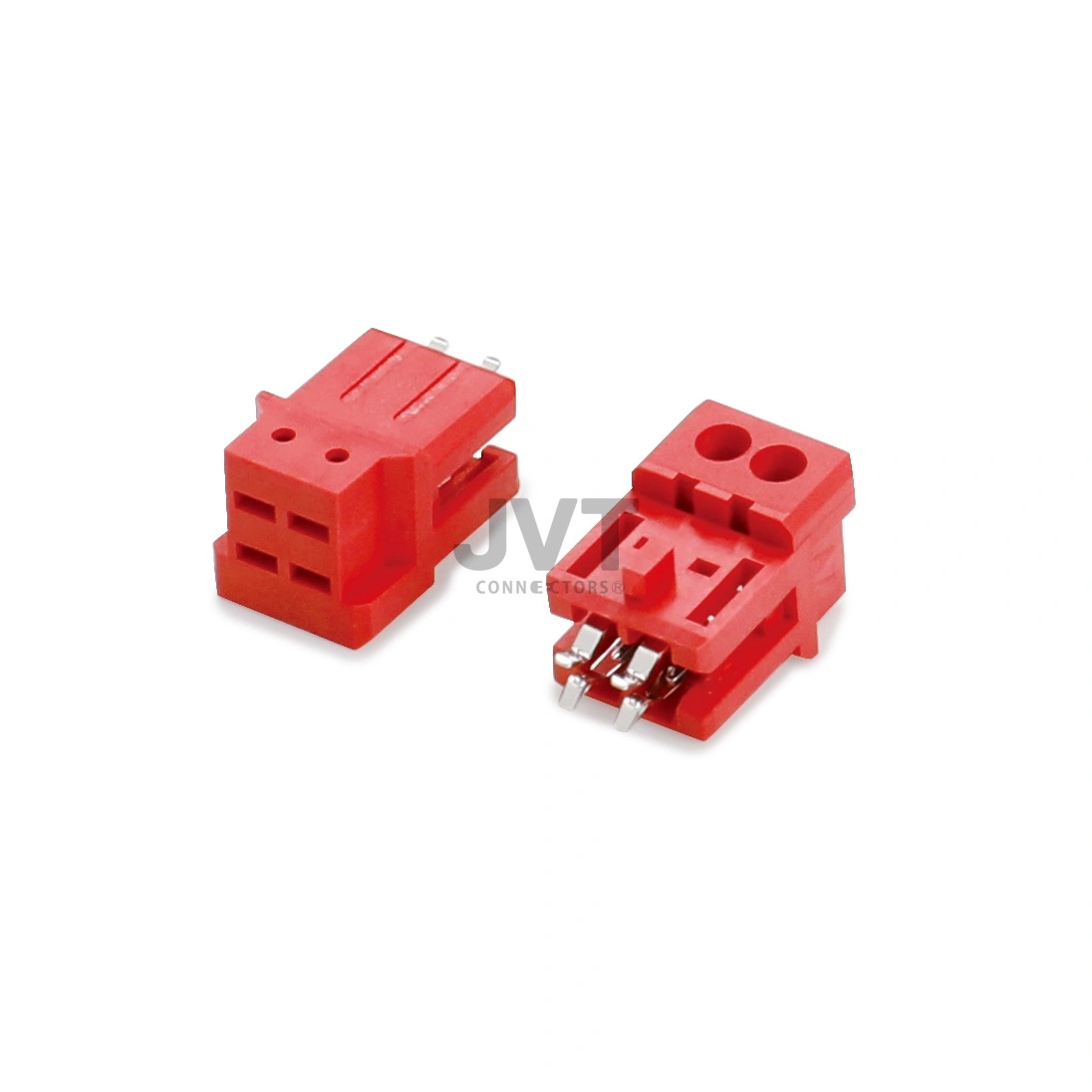
IDC Connector vs Crimp Connector: What Are the Differences
A professional technical guide by JVT Connectors exploring the mechanics, benefits, and industrial applications of modern interconnect solutions.
Introduction to Electrical Termination Technologies
In the vast world of electronic manufacturing, choosing the right termination method is critical for ensuring signal integrity and long-term durability. Two of the most prevalent methods used today are Insulation Displacement Connections (IDC) and Crimp terminations. While both serve the purpose of establishing a reliable electrical path between a wire and a terminal, they rely on vastly different mechanical principles. The IDC Connector has revolutionized high-speed assembly and ribbon cable integration, while crimp connectors remain the gold standard for high-vibration and discrete wire applications. Understanding these differences is essential for engineers and procurement specialists aiming to optimize their production lines.
At JVT Connectors, we specialize in providing high-precision interconnect solutions that cater to various industrial needs. Whether your project requires the rapid deployment capabilities of an IDC Connector or the robust mechanical strength of a crimp terminal, selecting the appropriate technology impacts not only the assembly cost but also the field performance of the end product. This article provides a comprehensive deep dive into how these two technologies compare across several critical metrics, including assembly speed, electrical reliability, and environmental resistance.
The Mechanics and Engineering of the IDC Connector
The fundamental principle behind an IDC Connector is the elimination of the wire-stripping process. The connector utilizes a sharp, V-shaped or U-shaped contact blade that is designed to pierce through the wire's insulation. As the wire is pressed into the slot, the blades displace the insulation and make direct contact with the internal conductor. This process creates a cold-welded, gas-tight connection that is highly resistant to oxidation. This technology was originally developed for telecommunications but has since expanded into consumer electronics, automotive data systems, and industrial controls where multi-conductor ribbon cables are prevalent.
One of the primary advantages of utilizing an IDC system is the sheer speed of installation. Because multiple contacts can be terminated simultaneously using a simple press tool, the labor hours required for assembly are significantly reduced compared to individual crimping. JVT Connectors offers a wide range of products including the JVT2542 series, which exemplifies the precision required in modern IDC designs. These connectors are engineered to maintain constant contact pressure over decades of use, ensuring that the interface between the blade and the conductor remains undisturbed by thermal cycling or minor vibrations.
However, the IDC method does have specific requirements regarding wire types. It is most effective with solid or specially stranded wires that match the specific gauge of the connector's displacement slots. If the wire is too thick, it can damage the contact blades; if it is too thin, the gas-tight seal may not form correctly. This precision is why JVT Connectors maintains rigorous quality control standards to ensure that every IDC Connector produced meets global reliability benchmarks for pitch accuracy and material hardness.
Understanding Crimp Termination Performance
Crimp termination is a mechanical process that involves stripping a portion of the wire insulation and then compressing the terminal around the bare conductor. This compression causes the terminal and the wire to deform together, creating a solid mass of metal with very low electrical resistance. Unlike the IDC Connector, which handles the insulation displacement internally, crimping requires a separate stripping step, which can add complexity to the assembly process but offers unparalleled mechanical pull-out strength.
In environments subject to extreme vibrations or mechanical stress, such as aerospace or heavy machinery, crimp connectors are often preferred. The crimp barrel provides a physical grip on the wire that is difficult to replicate with displacement blades. Furthermore, crimping allows for the termination of discrete wires of varying gauges within the same housing, providing greater flexibility for complex wiring harnesses. JVT Connectors provides high-performance crimp solutions such as our wire-to-board series, designed for high-current and high-reliability applications.
A critical factor in crimping is the quality of the tooling. A proper crimp must achieve the correct "crimp height" to ensure that the wire strands are sufficiently compressed without being severed. Over-crimping can weaken the wire, while under-crimping leads to loose connections and potential fire hazards due to high resistance. This is why many manufacturers choose JVT Connectors as their long-term partner, as we provide not only the terminals but also the technical specifications and support necessary to achieve perfect terminations every time.
Head-to-Head Comparison
Why Choose JVT Connectors for Your Project?
As a leading manufacturer based in China, JVT Connectors (Dongguan Qiaoye Electronics Co., Ltd) has earned the title of a National High-Tech Enterprise. We are dedicated to the "localization substitution" of imported high-end connectors, offering performance that rivals global brands at a more competitive cost. Our product portfolio covers everything from 0.60mm pitch miniature connectors to robust 6.35mm power interfaces.
Stringent Quality
Our facilities are ISO certified, and every IDC Connector undergoes rigorous testing for contact resistance and durability.
Custom Solutions
We provide ODM and OEM services, tailoring pitch, pin counts, and materials to meet specific engineering challenges.
Global Supply
With an extensive range of all connector products, we support innovation across Europe, America, and Southeast Asia.
Frequently Asked Questions
Q1: Can I reuse an IDC Connector after the wire has been removed?
Generally, it is not recommended to reuse an IDC Connector. The displacement blades are designed to deform slightly to create a gas-tight seal during the first insertion. Removing the wire can weaken the structural integrity of the blades, leading to a poor electrical connection if a new wire is inserted. For high-reliability projects, always use a new connector.
Q2: What wire types are most compatible with an IDC Connector?
The most compatible wires for an IDC Connector are solid core wires or stranded wires with a specific strand count that fits the blade gap. It is crucial to match the wire's AWG (American Wire Gauge) and insulation thickness with the connector's specifications. Using the wrong insulation material can also lead to failure if the blades cannot pierce it cleanly.
Q3: How does the IDC Connector maintain a gas-tight connection?
The IDC Connector maintains a gas-tight connection through "residual spring force." The contact blades act as a spring, continuously exerting pressure on the conductor. This pressure is high enough to exclude oxygen and moisture from the contact interface, preventing the formation of non-conductive oxides over the product's lifespan.
Q4: Are IDC Connectors suitable for high-power applications?
While there are specialized power-rated versions, a standard IDC Connector is typically used for signal transmission or low-to-medium power. Because the contact area is limited to the points where the blades touch the conductor, they have higher current density than crimped connections. For high-current power distribution, crimp terminals or board-in connectors are usually preferred.
Q5: Why is JVT Connectors considered a leader in IDC Connector manufacturing?
JVT Connectors combines advanced manufacturing technology with deep material science expertise. Our IDC Connector designs undergo stringent testing for environmental stress, vibration, and thermal aging. By focusing on precision and localization, we provide global-tier quality that helps our customers reduce costs without sacrificing the reliability of their electronic systems.
Ready to Elevate Your Connectivity?
Whether you need precision IDC systems or robust crimp solutions, JVT Connectors has the expertise to support your design.