

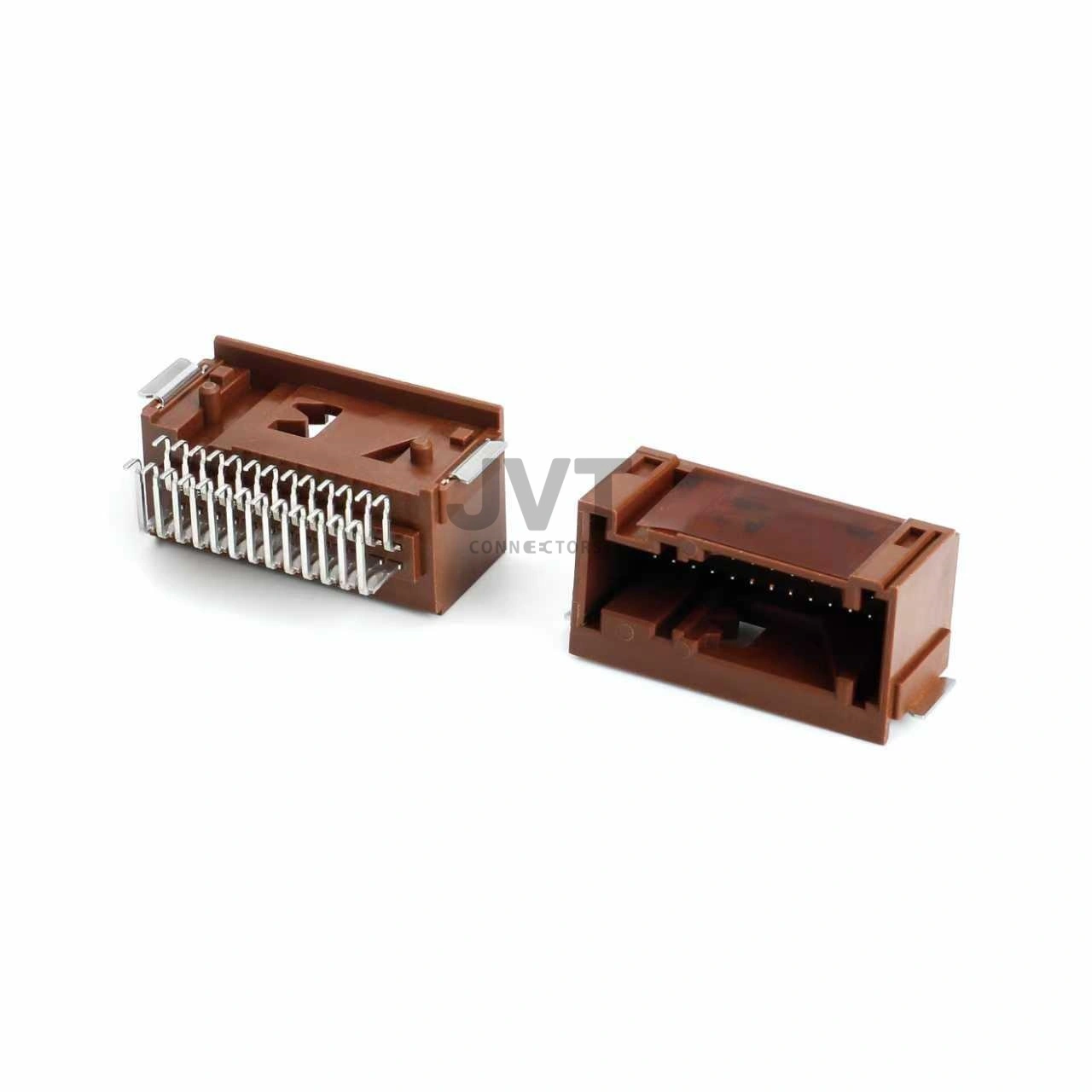
Common Applications of Wire to Wire Connectors in Industrial and Automotive Systems
In the rapidly evolving landscape of electronic engineering, the reliability of signal and power transmission is paramount. Wire to wire connectors serve as the fundamental backbone for complex wiring architectures, providing a secure and detachable interface between two wire-terminated cables. As systems in the automotive and industrial sectors become increasingly sophisticated, the demand for high-performance interconnect solutions has surged. JVT Connectors, a leader in the field, provides a comprehensive range of these components designed to withstand harsh environments while maintaining electrical integrity. Whether it is a high-vibration vehicle engine compartment or a high-precision robotic assembly line, the choice of the right connector pitch and crimp style can dictate the overall success and longevity of the system.
The Strategic Importance of Wire to Wire Connectors in Automotive Engineering
Modern vehicles are no longer just mechanical machines; they are data centers on wheels. From Electric Vehicles (EV) to Advanced Driver Assistance Systems (ADAS), the sheer volume of electrical connections is staggering. Wire to wire connectors are utilized extensively in automotive wiring harnesses to connect various sub-assemblies. For instance, in lighting systems, these connectors allow for easy replacement and maintenance of headlight modules without necessitating a complete harness overhaul. The automotive industry requires connectors that can endure extreme temperature fluctuations, exposure to fluids, and relentless mechanical shock.
In EV battery management systems (BMS), the role of wire to wire connectors is even more critical. They manage the communication between individual battery cells and the central control unit. Any failure in this connection could lead to inaccurate data reporting or, in extreme cases, thermal runaway. JVT Connectors addresses these challenges by offering robust crimp-style connectors with secure locking mechanisms. These designs ensure that even under the constant vibration of high-speed travel, the electrical contact remains stable. Furthermore, the trend toward miniaturization in automotive electronics has pushed the adoption of smaller pitches, such as 1.25mm and 2.00mm, allowing engineers to pack more functionality into tighter spaces without compromising on safety standards.
Industrial Automation and the Role of Robust Interconnects
Industrial environments present a unique set of challenges including electromagnetic interference (EMI), chemical exposure, and heavy mechanical loads. In factory automation, wire to wire connectors are the primary choice for connecting sensors, actuators, and programmable logic controllers (PLCs). The ability to quickly disconnect and reconnect wiring during machine reconfiguration or maintenance is a significant operational advantage. Large-scale manufacturing lines rely on the modularity provided by these connectors to reduce downtime. When a sensor fails, a technician can simply swap the unit using the existing wire to wire interface, rather than rewiring the entire circuit back to the control panel.
Moreover, in the field of robotics, the flexibility of the wiring harness is crucial. Robotic arms undergo millions of cycles of motion, placing immense strain on the internal wiring. Wire to wire connectors with high-flexibility terminals and high-cycle durability ratings are essential here. JVT Connectors provides specialized industrial solutions with pitches ranging from 3.00mm to 6.35mm to handle higher current loads typical in motor drives and power distribution units. By implementing high-quality wire to wire connectors, industrial operators can ensure that their automation systems remain efficient and that the risk of intermittent signal loss—a common cause of phantom errors in automated systems—is minimized.
Technical Deep Dive: Crimp Style and Pitch Variations
The technical efficacy of wire to wire connectors is often defined by their pitch and termination method. Crimp-style termination is the industry standard for wire to wire applications because it creates a gas-tight connection that is highly resistant to environmental degradation. This mechanical bond ensures that the wire remains fused to the terminal even under significant pull-out force. JVT Connectors excels in manufacturing terminals that provide consistent contact pressure, which is vital for low-voltage signal transmission where even a slight increase in resistance can cause data corruption.
Selecting the correct pitch is equally important. A smaller pitch, such as the 1.00mm or 1.25mm series, is ideal for high-density applications like consumer electronics or compact medical devices. Conversely, larger pitches like 4.20mm and 6.35mm are designed for power applications where heat dissipation and creepage distances are primary concerns. For example, the 4.20mm pitch series is a staple in computer power supplies and industrial machinery due to its balance of size and current-carrying capacity. JVT Connectors offers a diverse portfolio across these specifications, ensuring that engineers can find the exact match for their current, voltage, and space requirements.
Why Choose JVT Connectors for Your Systems
As a professional manufacturer with years of expertise, JVT Connectors understands the nuances of connectivity in demanding markets. Our products are engineered to exceed international standards, providing peace of mind for OEMs and system integrators worldwide. We specialize in providing high-reliability wire to wire connectors that feature positive locking systems, preventing accidental disconnection due to vibration or pulling. Our material selection process involves using high-grade plastics for housings and premium alloys for terminals to ensure optimal conductivity and corrosion resistance.
Furthermore, JVT Connectors offers customization services to meet specific project needs. Whether you require a specific wire gauge compatibility or a unique housing color for circuit identification, our engineering team is equipped to provide tailored solutions. By choosing JVT, you are not just buying a component; you are investing in a partnership dedicated to the stability and performance of your electronic infrastructure. Our commitment to innovation and quality control makes us a preferred supplier for industry leaders in the automotive and industrial sectors.
Professional Insights and Strategic Solutions
-
Always verify the current rating per circuit at the maximum ambient temperature to avoid thermal failures.
-
Utilize connectors with secondary locking features (TPA) in automotive applications to ensure terminals are fully seated.
-
For industrial retrofitting, choose pitches that are compatible with existing standardized wiring harnesses to save on cost.
Conclusion
In conclusion, wire to wire connectors are indispensable components that bridge the gap between complexity and reliability in modern industrial and automotive systems. From facilitating the electrification of transport to enabling the next generation of smart factories, these interconnects provide the vital link for energy and data. JVT Connectors remains at the forefront of this technology, offering high-quality, durable, and precise solutions tailored to the needs of global manufacturers. By understanding the specific requirements of your application—be it pitch, current capacity, or environmental resistance—you can select a connector that enhances system performance and reduces long-term maintenance costs.
Frequently Asked Questions (FAQ)
Q1: How do I select the right pitch for wire to wire connectors?
Selection depends on your space constraints and electrical requirements. Smaller pitches like 1.25mm are for signal-heavy, compact devices, while larger pitches like 4.20mm or 6.35mm are better for high-power industrial applications. You can explore our wire to wire crimp style category for specific measurements.
Q2: Why are wire to wire connectors preferred in automotive wiring harnesses?
They offer modularity and ease of repair. In vehicles, being able to disconnect a module (like a door lock or headlight) without cutting wires is essential for maintenance efficiency and assembly speed on the production line.
Q3: Can JVT Connectors provide waterproof wire to wire solutions?
Yes, we offer specialized series designed for harsh environments. Our automotive-grade connectors often include sealing options to meet IP67 or higher standards. For more details on our manufacturing capabilities, visit our About Us page.
Q4: What are the benefits of crimp-style wire to wire connectors over soldering?
Crimping is faster, more consistent, and more resistant to vibration fatigue compared to soldering. It provides a superior mechanical bond that is vital in industrial machinery. Check our 4.20mm pitch products for high-reliability crimp examples.
Q5: Are wire to wire connectors compatible with different wire gauges?
Yes, most terminal designs within a specific connector series can accommodate a range of AWG (American Wire Gauge) sizes. It is important to match the terminal to the specific wire gauge to ensure a proper crimp. Please contact us for technical support on wire compatibility.