

Wire to Wire Connector vs Wire to Board Connector: Key Differences Explained
A comprehensive technical guide to understanding connectivity architectures in modern electronic design, featuring insights from JVT Connectors.
In the rapidly evolving landscape of electronic manufacturing, the integrity of a system often hinges on the reliability of its smallest components: the connectors. Whether you are designing a complex automotive control unit or a compact consumer handheld device, choosing between a Wire to Wire and a Wire to Board Connector is a fundamental decision that impacts assembly, maintenance, and signal performance. At JVT Connectors, we have spent over a decade perfecting these interfaces to ensure that engineers have access to robust, high-precision solutions that meet international standards. Understanding the nuances of these two connector types is not just about physical fit; it is about optimizing the entire lifecycle of the electrical circuit.
The terminology can sometimes be confusing for those new to the industry, but the concepts are straightforward. A Wire to Board Connector is designed to bridge the gap between discrete wires and a printed circuit board (PCB), allowing power and signals to enter or exit the logic center of a device. Conversely, a wire-to-wire system connects two separate wire harnesses, creating a modular link that can be disconnected for servicing or extended across long distances within a chassis. As we dive deeper into the technical specifications, we will see how factors like pitch, termination style, and environmental sealing differentiate these two critical components.
Deep Dive into the Wire to Board Connector
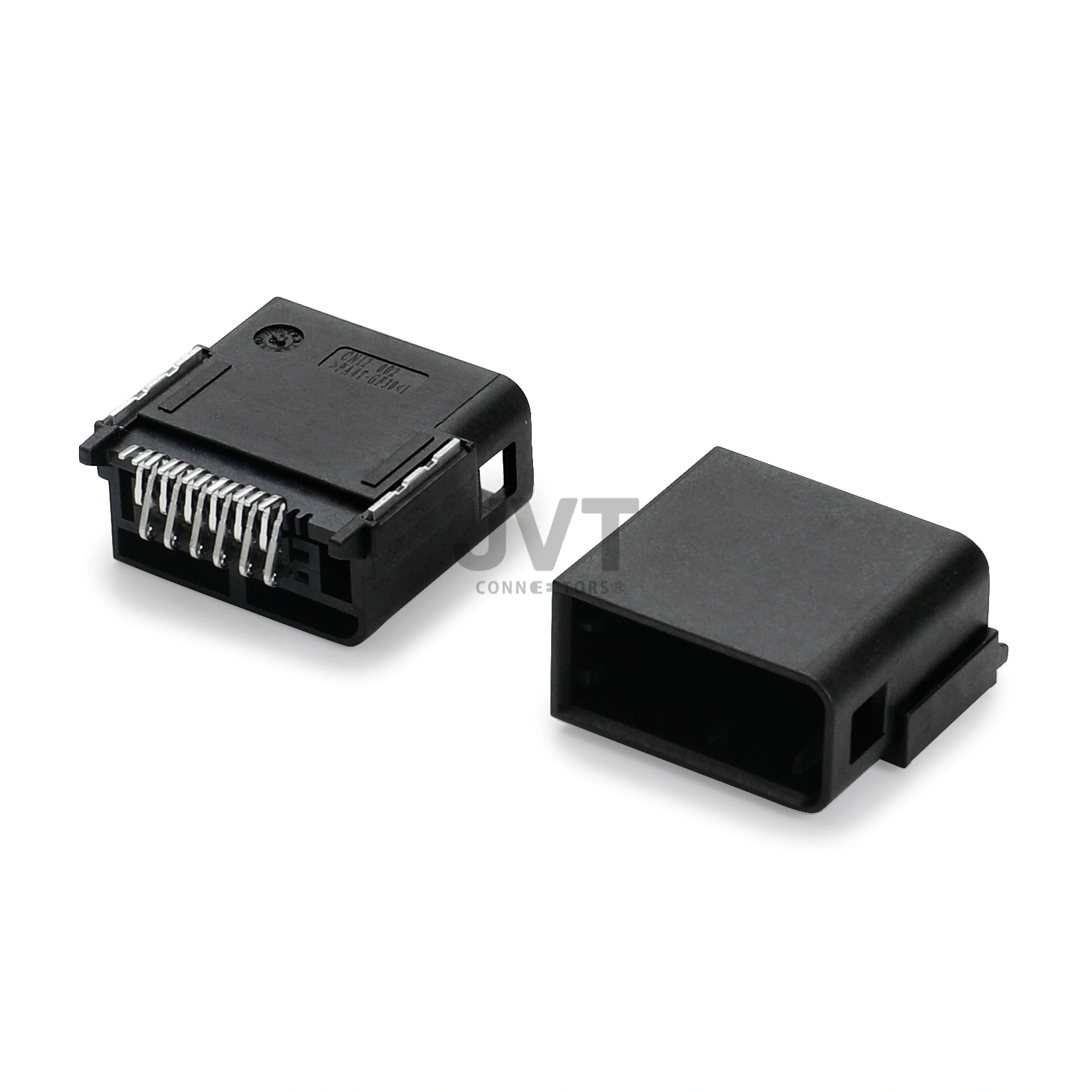
The Wire to Board Connector serves as the primary gateway for electrical signals to interact with the active components on a PCB. This category includes a vast array of pitches, from the ultra-fine 0.60mm pitch used in mobile devices to the heavy-duty 6.35mm pitch found in industrial power modules. JVT Connectors specializes in providing these interfaces in various configurations, including vertical and right-angle headers. The versatility of a Wire to Board Connector allows it to be used in everything from lithium battery management systems to smart home appliances, providing a secure mechanical and electrical connection that can withstand vibration and thermal cycling.
One of the defining features of this connector type is the mounting style. Most headers are either Through-Hole (THT) or Surface Mount Technology (SMT). SMT headers are particularly popular in modern miniaturized electronics because they allow for components to be placed on both sides of the board, maximizing space. JVT Connectors offers high-performance versions like the JVT1257 series, which features low-profile designs specifically engineered for tight spaces. Furthermore, the termination of the wire side usually involves a crimp terminal housed within a plastic shell, which then snaps into the board-mounted header. This modularity makes it easy for manufacturers to assemble devices quickly while ensuring that the Wire to Board Connector provides a stable, long-term interface.
The Role of Wire to Wire Connector Systems
Unlike their board-mounted counterparts, wire-to-wire connectors are designed to connect two wire harnesses together. These are essential in applications where the PCB is distant from the sensors, actuators, or power sources. For instance, in an electric vehicle, the wiring harness must navigate through complex structural frames; wire-to-wire connectors allow for these harnesses to be broken down into manageable segments. This modularity is a lifesaver during maintenance, as it allows technicians to replace a specific section of the wiring without having to re-run the entire cable assembly. JVT Connectors provides a wide range of crimp-style wire-to-wire solutions that offer high current-carrying capacity and superior retention force.
A key characteristic of these connectors is the use of both male and female housings that lock together securely. Many of our designs at JVT Connectors incorporate positive locking mechanisms, which prevent accidental disconnection due to high-vibration environments. These systems are often found in professional power tools and automotive lighting systems where reliability is non-negotiable. While the Wire to Board Connector focuses on the PCB interface, the wire-to-wire system focuses on the continuity between cables, often requiring secondary locks (TPA) to ensure the terminals are fully seated. This ensures that even in the harshest conditions, the electrical flow remains uninterrupted across the entire system architecture.
Comparative Analysis: Key Differences and Selection Criteria
When evaluating which system to implement, engineers must consider several technical factors. The most obvious difference is the mounting surface. A Wire to Board Connector requires a footprint on the PCB, whereas a wire-to-wire connector is "free-hanging" or "panel-mounted." This affects the spatial layout of the device. Furthermore, the pitch—the distance between the center of one contact and the next—can vary significantly. Wire to board solutions often push the boundaries of miniaturization, reaching pitches as small as 0.60mm (JVT0600 series), while wire-to-wire solutions typically start at 1.0mm or 1.25mm to accommodate the bulkier housing required for manual handling and locking.
Another critical factor is current and voltage ratings. While both types can handle significant power, wire-to-wire connectors are often optimized for higher current applications because they are not limited by the trace width of a PCB. Conversely, the Wire to Board Connector must be carefully matched to the board's thermal capacity. Material selection also plays a role; JVT Connectors utilizes high-grade plastics and copper alloys with various plating options (Gold, Tin, or Nickel) to ensure the best performance for the specific application. Selecting the right connector involves balancing these physical constraints with the operational requirements of the end product, ensuring that the final design is both functional and cost-effective.
Professional Insights and Strategic Solutions
Choosing the right interconnect solution is a strategic decision that influences the assembly line efficiency and the long-term failure rate of the product. At JVT Connectors, we recommend a "Selection-First" approach, where the connector is chosen during the early PCB layout phase rather than as an afterthought. This prevents issues such as component interference or insufficient clearance for manual mating. For high-density applications, integrating a Wire to Board Connector with a right-angle orientation can significantly reduce the vertical profile of the device, allowing for sleeker product designs in consumer electronics like laptops and smart wearables.
Furthermore, implementing standardized connector series across multiple product lines can lead to quantifiable improvements in supply chain management. By utilizing common terminals and housings, manufacturers can reduce the number of unique parts in their inventory, simplifying the procurement process. JVT Connectors supports this strategy by offering cross-compatible solutions that match industry-standard footprints while providing enhanced durability. Our engineering team also provides custom tooling and assembly advice to ensure that the crimping process—the most frequent point of failure in any connector system—is performed to the highest possible standards, ensuring every Wire to Board Connector performs as intended.
Why Choose JVT Connectors for Your Connectivity Needs?
JVT Connectors is more than just a manufacturer; we are a dedicated partner in electronic innovation. With decades of experience in the connector industry, we have developed a reputation for excellence, particularly in the production of high-quality Wire to Board Connector series and precision terminal systems. Our facilities are equipped with advanced automation technology, ensuring that every batch of connectors meets rigorous quality control standards, including ISO certifications. We pride ourselves on our ability to offer localized substitution for imported brands, providing the same—if not better—reliability with more competitive lead times and costs.
Our extensive product catalog covers a wide range of pitches and styles. For those looking for specific board-to-board or wire-to-board solutions, we invite you to explore our specialized categories:
Frequently Asked Questions
Q1: What is the primary function of a Wire to Board Connector?
The primary function of a Wire to Board Connector is to provide a secure and reliable electrical path between a wire harness and a printed circuit board. It consists of a header (mounted on the board) and a housing with terminals (attached to the wires). This setup allows for easy assembly, testing, and field replacement of electronic modules within a larger system.
Q2: How do I choose the correct pitch for my Wire to Board Connector?
Selecting the right pitch for a Wire to Board Connector depends on your space constraints and electrical requirements. Smaller pitches (like 1.0mm or 1.25mm) are ideal for compact signal transmission, while larger pitches (3.0mm to 6.35mm) are better suited for power delivery. You must also consider the gauge of the wire, as thicker wires require larger terminal housings.
Q3: Are Wire to Board Connector systems vibration resistant?
Yes, many Wire to Board Connector designs include friction locks or positive locking latches to ensure they remain connected even in high-vibration environments like automotive or industrial machinery. JVT Connectors specifically engineers these features into our products to maintain signal integrity under harsh conditions.
Q4: Can a Wire to Board Connector be customized for specific PCB heights?
Absolutely. A Wire to Board Connector can be customized with different header heights, pin lengths, and orientations (vertical vs. right-angle). JVT Connectors offers ODM services to help clients design the perfect interface that fits their specific mechanical envelope and stacking requirements.
Q5: What materials are commonly used in a high-quality Wire to Board Connector?
A high-quality Wire to Board Connector typically uses high-temperature nylon or LCP for the housing to withstand soldering processes. The contacts are usually made of phosphor bronze or brass, often plated with tin or gold to prevent corrosion and ensure low contact resistance over the product's lifespan.
Conclusion
In summary, while the choice between wire-to-wire and wire-to-board systems depends heavily on your specific architecture, understanding the mechanical and electrical advantages of each is paramount. A high-performance Wire to Board Connector is the backbone of PCB-centric designs, offering precision and miniaturization that drive modern technology forward. JVT Connectors remains at the forefront of this industry, providing the expertise and the product range necessary to turn complex connectivity challenges into seamless, reliable solutions. Whether you are looking for standard components or fully customized interconnects, our team is ready to support your next project with world-class engineering and manufacturing excellence.