

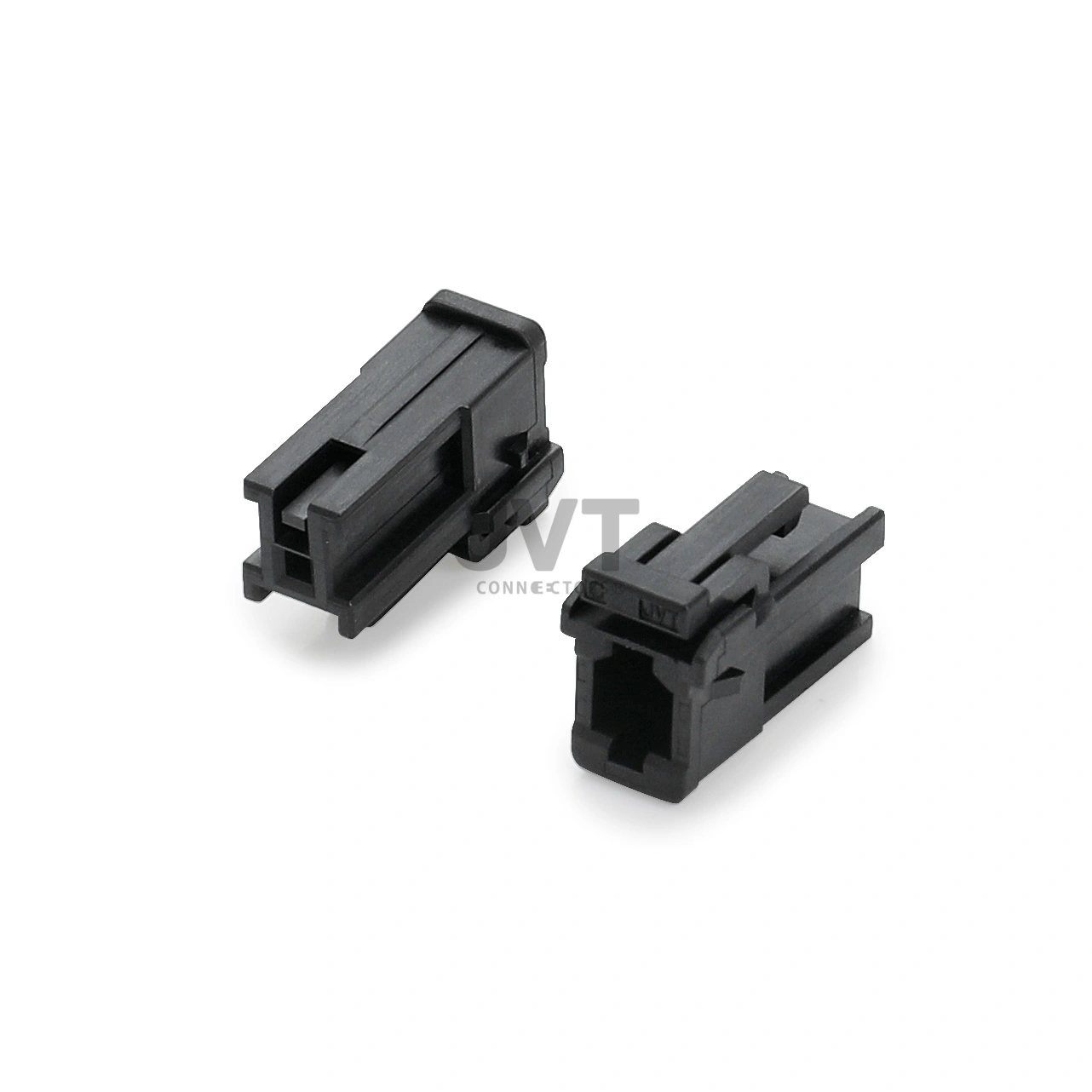
How to Ensure Reliable Connections with High-Quality Wire to Wire Connectors
In the complex world of modern electronics, the integrity of an electrical system often depends on its weakest link. For many engineers and manufacturers, that link is the physical connection between two cable harnesses. A high-quality Wire to Wire Connector is not just a plastic housing and some metal terminals; it is the fundamental component that ensures power and signals are transmitted without loss or interruption across diverse environments. Whether in an automotive engine bay, a smart home appliance, or a high-speed industrial robot, the selection of the right interconnect solution is paramount to preventing system failures and ensuring long-term operational safety.
The demand for smaller, faster, and more durable connections is driving innovation in the connector industry. As devices become more compact, the need for precision-engineered components like those offered by JVT Connectors has grown exponentially. In this guide, we will explore the technical nuances of selecting a Wire to Wire Connector, the importance of material science in connectivity, and how specialized manufacturing processes at JVT Connectors provide a competitive edge for global OEMs.
Understanding the Fundamentals of the Wire to Wire Connector
A Wire to Wire Connector is designed to facilitate the joining of two wire-terminated cables. Unlike wire-to-board solutions that anchor to a PCB, these connectors are used for "floating" or "free-hanging" connections. The architecture typically consists of a male housing (plug) and a female housing (receptacle), each containing crimp terminals. This modularity allows for easier assembly, repair, and replacement of cable harnesses within a larger system.
When evaluating these components, one must consider the mechanical design, which must withstand physical stressors like vibration, shock, and tensile force. High-quality designs incorporate features such as secondary locks (TPA - Terminal Position Assurance) to ensure that the terminals are fully seated and cannot be backed out. JVT Connectors specializes in these precise mechanical features, offering a wide range of products that cater to varying current and voltage requirements while maintaining a compact footprint.
Beyond basic connectivity, the choice of a Wire to Wire Connector also involves looking at the mating interface. Smooth insertion and high retention forces are the hallmarks of professional-grade manufacturing. If the contact force is too low, electrical resistance increases, leading to overheating. Conversely, if the mating force is too high, it complicates the assembly process on the production line. Finding this balance is a core expertise of JVT Connectors.
Technical Considerations: Pitch and Current Ratings
The "pitch" of a connector—the distance between the centers of adjacent contacts—is perhaps the most critical specification. In the realm of the Wire to Wire Connector, pitch sizes vary significantly based on application. JVT Connectors provides solutions ranging from the ultra-fine 1.00mm pitch for miniaturized hand-held electronics to the robust 6.35mm pitch designed for high-current industrial applications.
As the pitch decreases, the challenges of electrical isolation increase. Manufacturers must use high-performance engineering plastics with excellent dielectric strength to prevent arcing between terminals. Furthermore, the current-carrying capacity is closely tied to both the terminal material and the wire gauge it can accept. A 4.20mm pitch connector, for example, is often favored in power supply units due to its ability to handle significant current without excessive heat generation.
Reliability in high-density configurations is another area where JVT Connectors excels. When multiple wires are bundled together, crosstalk and electromagnetic interference (EMI) can become issues. While the connector itself is often passive, the precision of the terminal spacing ensures that the system maintains signal integrity even in crowded electronic environments.
Material Science: The Heart of Durable Connections
The longevity of a Wire to Wire Connector is determined by its materials. The housing is typically made from thermoplastic resins like Nylon (PA66) or LCP (Liquid Crystal Polymer), which offer a blend of heat resistance and mechanical toughness. These materials must meet strict flammability standards, such as UL94V-0, to ensure safety in consumer and industrial products.
Equally important is the metallurgy of the contacts. Most terminals use copper alloys (like phosphor bronze or brass) for their superior conductivity. To prevent oxidation and corrosion, these alloys are plated with either tin or gold. Gold plating is preferred for low-signal, high-reliability applications where even a small amount of corrosion could disrupt data. Tin plating is the cost-effective standard for power applications.
JVT Connectors employs rigorous testing protocols to ensure that every Wire to Wire Connector can survive harsh conditions. Salt spray tests, thermal cycling, and humidity aging are all part of the quality assurance process. This commitment to material excellence ensures that JVT products remain functional for the entire lifecycle of the end product, reducing the need for costly field repairs.
The Importance of Crimp Integrity in Wire to Wire Systems
The performance of a Wire to Wire Connector is only as good as the crimp that attaches it to the wire. Crimping is a cold-welding process where the terminal sleeve is deformed around the wire strands. A perfect crimp creates a gas-tight seal, preventing oxygen from reaching the contact area and causing oxidation.
Poor crimping leads to high contact resistance and eventual failure. This is why selecting a manufacturer like JVT Connectors, who provides detailed crimp specifications and compatible tooling recommendations, is essential for automotive and industrial OEMs. The crimp style used in Wire to Wire Connector designs is often a "wrap-around" or "B-crimp" style, which offers excellent pull-out resistance and electrical performance.
Furthermore, the design of the terminal itself—including its "lance" (the little metal tab that locks it into the housing)—must be robust. If the terminal lance is too weak, the wire can pull out of the housing during assembly or when subjected to strain. JVT’s terminal designs are engineered for high retention, ensuring that the Wire to Wire Connector remains secure under the toughest mechanical loads.
Why Choose JVT Connectors for Your Connectivity Needs
As a professional manufacturer with years of experience, JVT Connectors (Dongguan Qiaoye Electronics Co., Ltd.) has established itself as a leader in the connector industry. We are a national high-tech enterprise focused on precision manufacturing and localization substitution for premium international brands. Our Wire to Wire Connector solutions are designed to meet or exceed international standards, providing our clients with reliable, cost-effective alternatives for their electronic designs.
Our advantage lies in our vertical integration. From mold design and precision stamping to automated assembly and comprehensive testing, we control every step of the process. This ensures that every Wire to Wire Connector leaving our facility is of the highest quality. We offer a vast product catalog, including various pitches and configurations to suit any application.
Key product series include:
Wire to Wire Crimp Style Series: Highly versatile and robust solutions for general purpose cabling. See more at our Wire to Wire Crimp Style Page.
Compact Pitch Connectors: 1.25mm and 2.00mm pitch options for space-constrained electronics like lithium batteries. Visit our 1.25mm Pitch Section.
Industrial Grade Housings: Rugged 4.20mm and 6.35mm pitch connectors for high-power distribution. Check out the 4.20mm Pitch Solutions.
Beyond our products, our commitment to service is unmatched. We provide technical support for customization, helping you adapt a Wire to Wire Connector to your specific environmental or mechanical requirements. Learn more About JVT Connectors and our manufacturing capabilities.
Conclusion
Ensuring a reliable electrical connection is a multi-faceted challenge that requires the right components, the right materials, and the right manufacturing partner. A high-quality Wire to Wire Connector serves as the backbone of a stable system, preventing the failures that lead to downtime and safety hazards. By focusing on pitch precision, material durability, and crimp integrity, JVT Connectors continues to empower innovation across the globe.
If you are looking for a trusted partner to provide high-performance connectivity solutions, we invite you to Contact Us today. Let JVT Connectors help you bridge the gap with quality you can rely on.
Frequently Asked Questions
Q1: What are the primary advantages of using a JVT Wire to Wire Connector?
Our Wire to Wire Connector products offer high mechanical stability, excellent dielectric properties, and a wide variety of pitch sizes. They are designed as high-quality alternatives to international brands, providing reliability at a better value for global manufacturers.
Q2: How do I select the right pitch for my Wire to Wire Connector application?
The pitch should be chosen based on the voltage requirements, available space, and current load. Smaller pitches like 1.00mm are for signal and small devices, while larger pitches like 4.20mm are for power-heavy Wire to Wire Connector applications in appliances or industry.
Q3: Are JVT Wire to Wire Connector products compliant with environmental standards?
Yes, every Wire to Wire Connector we produce complies with RoHS and REACH standards. We use eco-friendly materials and ensure that our manufacturing processes minimize environmental impact while maintaining high performance.
Q4: Can JVT provide a customized Wire to Wire Connector for specific industrial needs?
Absolutely. JVT Connectors has a dedicated engineering team that specializes in customizing Wire to Wire Connector solutions. Whether you need a specific color, modified housing, or special plating, we can develop a solution tailored to your project.
Q5: What testing is performed to ensure the reliability of a Wire to Wire Connector?
We perform a suite of tests including mating/unmating force testing, contact resistance measurement, salt spray resistance, and thermal shock. This ensures that each Wire to Wire Connector can withstand long-term use in demanding environments.