

Wire to Wire Connector Materials: What You Need to Know Before Buying
A comprehensive guide to selecting the right materials for high-performance electrical connectivity by JVT Connectors.
Introduction to Material Importance in Connectivity
In the intricate world of electronics and industrial design, a wire to wire connector is often the unsung hero that ensures seamless power and signal transmission between different system modules. While technical specifications like pitch, current rating, and voltage are paramount, the fundamental integrity of any wire to wire connector rests on its materials. Choosing the wrong plastic for the housing or the wrong alloy for the terminals can lead to catastrophic failures, including melting under high thermal loads, signal degradation through corrosion, or mechanical breakage due to environmental stress. At JVT Connectors, we understand that material science is the foundation of reliability, especially in demanding industries like automotive, aerospace, and consumer electronics.
Selecting the right material involves balancing performance requirements with cost-efficiency. For instance, a connector used in a household appliance has vastly different material needs compared to one integrated into an electric vehicle's powertrain. This guide will walk you through the three critical material components of a wire to wire connector: the insulating housing, the conductive terminals, and the protective plating. By understanding these elements, engineers and procurement professionals can make informed decisions that extend the lifecycle of their products and minimize the risk of field failures.
Insulating Housings: The Protective Shell
The housing of a wire to wire connector serves two primary purposes: providing electrical insulation between circuits and protecting the delicate metal terminals from mechanical damage and environmental contaminants. Most modern housings are made from high-performance engineering plastics. Nylon (Polyamide), specifically PA66, is a industry standard due to its excellent balance of mechanical strength, heat resistance, and cost-effectiveness. It is commonly used in products like the JVT1149 series for automotive applications where durability is non-negotiable. Nylon is naturally hygroscopic, meaning it absorbs moisture, which can affect its dimensional stability in extremely humid environments. However, for most indoor and protected outdoor applications, it remains the most versatile choice.
For applications requiring higher thermal stability, materials like PBT (Polybutylene Terephthalate) or LCP (Liquid Crystal Polymer) are preferred. PBT offers superior chemical resistance and does not absorb moisture as much as Nylon, making it ideal for marine or high-humidity industrial settings. LCP, on the other hand, is the gold standard for high-density connectors that must undergo SMT reflow soldering processes. Its ultra-high heat resistance ensures that the connector housing remains rigid even under temperatures exceeding 260 degrees Celsius. When buying a wire to wire connector, always specify the operating temperature range to ensure the housing material can withstand the environmental thermal load without warping or degrading.
Conductive Terminals: The Heart of the Signal
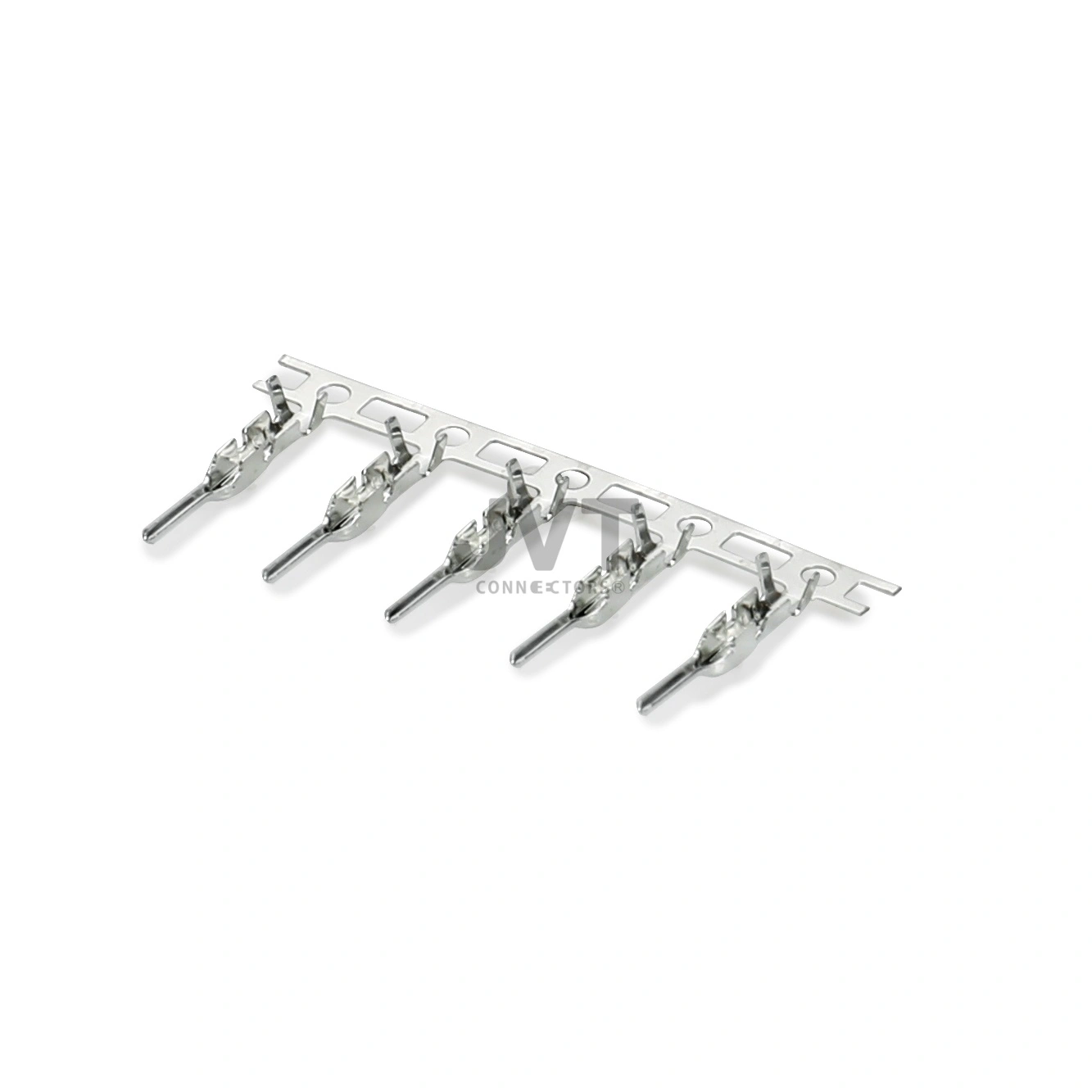
The efficiency of electrical transmission in a wire to wire connector depends almost entirely on the terminal material. Copper alloys are the universal standard due to their high electrical conductivity. However, pure copper is often too soft for the mechanical requirements of a connector, such as spring retention and repetitive mating cycles. Brass, an alloy of copper and zinc, is frequently used for general-purpose connectors. It offers good conductivity and is highly cost-effective, though it may lack the mechanical "memory" needed for high-vibration environments. For those seeking a higher tier of reliability, Phosphor Bronze is the material of choice.
Phosphor Bronze contains a small percentage of tin and phosphorus, which significantly increases its fatigue resistance and hardness compared to brass. This is critical for wire to wire connector systems that experience constant vibration, such as those used in power tools or industrial machinery. A terminal made of Phosphor Bronze maintains its contact pressure over thousands of mating cycles, preventing intermittent signals or power drops. At JVT Connectors, many of our high-reliability series, such as the JVT3024 and JVT3025, utilize premium phosphor bronze terminals to ensure that the electrical interface remains secure under the most grueling mechanical stresses.
Plating Technologies: Defending Against Corrosion
Even the best copper alloy terminal will eventually oxidize when exposed to air and moisture. Oxidation creates an insulating layer on the contact surface, leading to increased resistance and eventual failure. To prevent this, every high-quality wire to wire connector terminal is plated with a protective metal layer. Tin plating is the most common solution for low-current and consumer-grade applications. It is affordable and offers decent protection against corrosion. However, tin is susceptible to "fretting corrosion"—a phenomenon where microscopic movements between contacts wear away the plating, exposing the base metal. This is particularly problematic in automotive or industrial environments with high vibrations.
Gold plating is the premium alternative for mission-critical applications. Gold is chemically inert and does not oxidize, ensuring a stable, low-resistance contact for the entire life of the device. In high-speed data transmission or very low-voltage signal circuits, gold plating is essential to prevent signal loss. Often, "Selective Gold Plating" is used to balance cost and performance: gold is applied only to the critical contact area, while the rest of the terminal is tin-plated. When evaluating a wire to wire connector for your project, consider the environment. If the connector will be exposed to salt spray, high humidity, or chemical fumes, the extra investment in gold or specialized nickel-underplating is a strategic necessity to avoid future maintenance costs.
Why JVT Connectors is Your Trusted Manufacturing Partner
Choosing a supplier is just as important as choosing the material itself. JVT Connectors (Dongguan Qiaoye Electronics Co., Ltd.) is a recognized National High-Tech Enterprise and a "Specialized and Innovative" leader in the Chinese connector industry. With over a decade of expertise, we specialize in high-precision connectivity solutions that serve as reliable alternatives to international brands. Our manufacturing processes are strictly controlled, ensuring that every wire to wire connector leaving our facility meets international standards for safety and performance.
Our product range is vast, covering everything from Wire to Board Connectors to specialized Wire to Wire Crimp Style solutions. We pride ourselves on our localization substitution capabilities, helping global clients reduce costs without sacrificing the material quality found in premium imports. Whether you need the 4.20mm pitch reliability of our JVT1149 Series or the compact efficiency of our 1.50mm pitch models, JVT Connectors provides the technical support and material expertise required to bring your vision to life.
Quick Links for Professionals:
Frequently Asked Questions (FAQ)
Q1: What is the best housing material for a high-temperature wire to wire connector?
For high-temperature environments, LCP (Liquid Crystal Polymer) or high-temp Nylon (PA9T or PA46) are the best choices. These materials allow the wire to wire connector to maintain structural integrity during thermal cycles, making them ideal for automotive under-the-hood or industrial heating applications.
Q2: How does phosphor bronze improve a wire to wire connector?
Phosphor bronze provides better spring properties and fatigue resistance compared to standard brass. This means a wire to wire connector using these terminals will maintain a tighter electrical connection over time, especially in applications subject to movement or vibration.
Q3: When should I choose gold plating for my wire to wire connector?
Gold plating should be selected for any wire to wire connector handling low-level signals, high-frequency data, or operating in corrosive environments. Gold does not oxidize, ensuring that the contact resistance remains low and stable indefinitely.
Q4: Are JVT wire to wire connector products halogen-free?
Yes, many JVT Connectors series are designed to meet modern environmental standards, including halogen-free requirements and RoHS compliance. This ensures our wire to wire connector solutions are safe for use in consumer electronics and global markets.
Q5: Can JVT Connectors provide custom materials for a specific wire to wire connector application?
Absolutely. As an ODM and OEM specialist, JVT Connectors can customize housing plastics, terminal alloys, and plating thicknesses to meet your specific engineering requirements for any wire to wire connector project.
Conclusion: Material Selection Drives Reliability
Selecting the right materials for your connectivity needs is a strategic decision that affects product performance and brand reputation. By partnering with a knowledgeable manufacturer like JVT Connectors, you gain access to decades of material science expertise and world-class manufacturing. Don't compromise on your next project—choose the right wire to wire connector materials and build for the future.