

How to Choose the Right IDC Connector for Your Project
A comprehensive technical guide to selecting high-performance insulation displacement connectors for modern electronics manufacturing and industrial applications.
In the rapidly evolving landscape of electronic interconnection, the IDC Connector (Insulation Displacement Connector) remains a cornerstone of efficiency and reliability. Unlike traditional crimping methods that require time-consuming wire stripping, IDC technology allows for the simultaneous termination of multiple conductors by forcing a sharpened blade through the insulation to contact the conductor beneath. At JVT Connectors, we understand that selecting the perfect interconnect solution is not merely about matching pin counts; it is about ensuring long-term signal integrity and mechanical stability. This guide is designed to walk engineers and procurement specialists through the critical decision-making parameters to ensure their projects utilize the most effective connectivity solutions available today.
Understanding Technical Specifications and Pitch Selection
When beginning your selection process for an IDC Connector, the most immediate consideration is the pitch, which refers to the distance between the centers of two adjacent contacts. Common industry standards include 1.27mm, 2.00mm, and 2.54mm. Choosing the right pitch is often a balancing act between spatial constraints on a printed circuit board (PCB) and the current-carrying capacity required for the application. For high-density computing and telecommunications equipment where space is at a premium, a smaller 1.27mm pitch is frequently utilized. Conversely, industrial control systems that may require more robust mechanical handling often opt for the standard 2.54mm pitch. It is essential to ensure that the chosen pitch aligns perfectly with the flat ribbon cable being used, as even a minor mismatch can lead to improper insulation displacement and eventual connection failure.
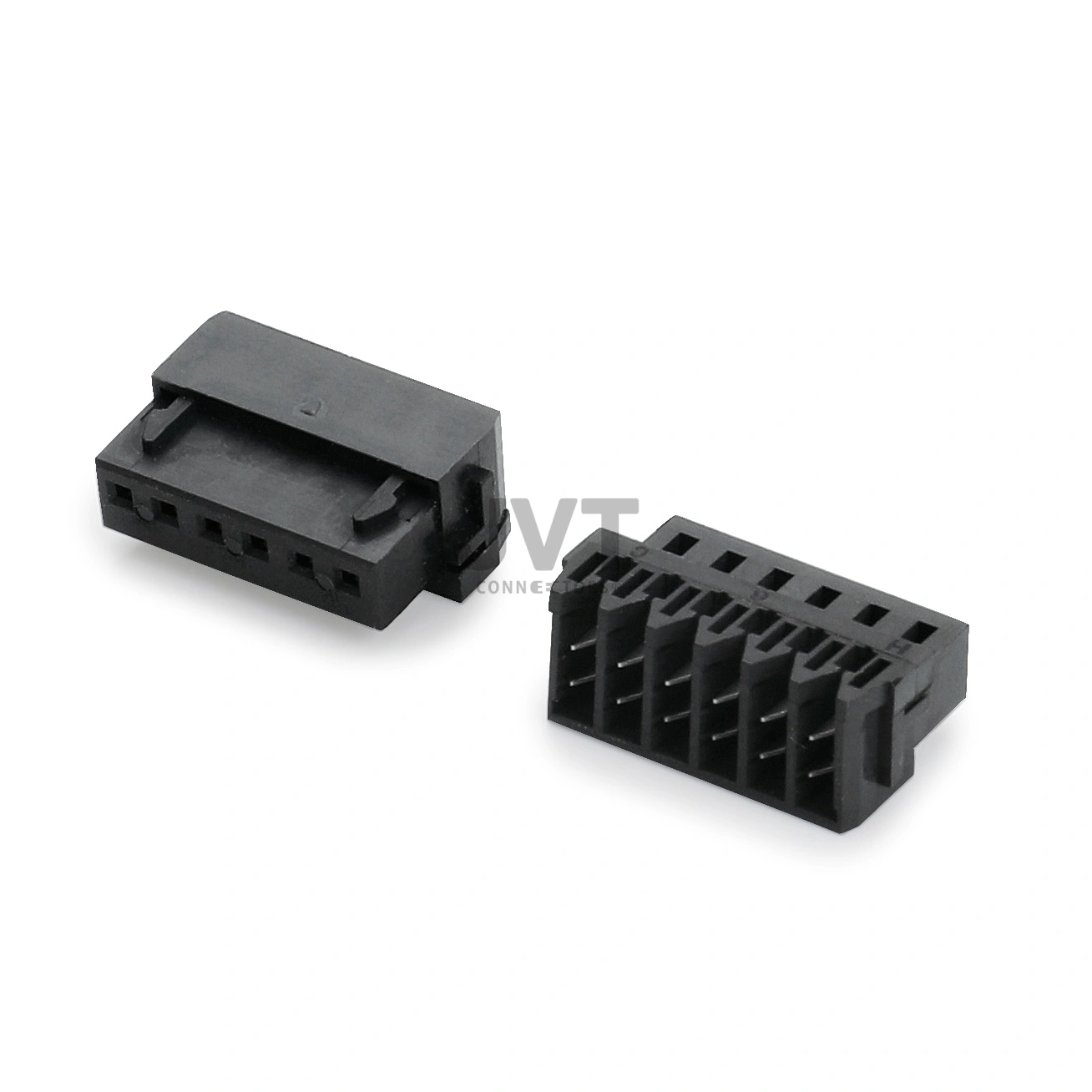
Beyond the physical dimensions, the number of positions or circuits is vital. Engineers must account for future-proofing and signal redundancy. JVT Connectors offers a wide variety of configurations, ensuring that whether your project requires a simple 6-pin interface or a complex 64-pin high-density array, there is a solution that fits. Furthermore, the orientation of the connector—whether it be vertical, right-angle, or wire-to-board—must be decided early in the design phase to avoid mechanical interference with other components or the device enclosure. Evaluating these technical specifications with a high degree of precision during the prototyping stage is the first step toward a successful manufacturing run.
Material Science and Environmental Durability Factors
The reliability of an IDC Connector is heavily dependent on the materials used for both the housing and the contacts. For the housing, high-temperature thermoplastics like PBT (Polybutylene Terephthalate) or Nylon are standard because they offer excellent electrical insulation and can withstand the rigors of wave soldering or reflow processes. At JVT Connectors, we prioritize materials that meet UL94V-0 flammability ratings, ensuring safety in consumer and industrial electronics. When your project operates in environments subject to thermal cycling or high humidity, the choice of plastic becomes even more critical to prevent warping or degradation over time.
The contact material is arguably the most important element for electrical performance. Phosphor bronze is frequently chosen for its excellent spring properties and conductivity, which ensures a constant gas-tight connection once the wire is displaced. Plating options such as gold or tin also play a major role. Gold plating is superior for low-voltage signal applications where oxidation must be avoided at all costs, while tin plating offers a cost-effective solution for power-heavy applications where higher contact forces are acceptable. Understanding the chemical and physical environment in which the IDC Connector will reside—such as exposure to salt spray, sulfur, or extreme vibrations—will dictate whether you need specialized plating or reinforced housing designs to maintain connectivity over the product's lifespan.
Industrial Applications and Professional Connectivity Solutions
The versatility of the IDC Connector makes it a staple across numerous sectors, including automotive electronics, medical device manufacturing, and factory automation. In automotive applications, for instance, these connectors are used in dashboard displays and sensor arrays where they must withstand constant vibration and shock. The gas-tight seal created by the IDC termination process is particularly beneficial here, as it prevents atmospheric contaminants from corroding the contact point. Our experience at JVT Connectors has shown that projects utilizing these connectors benefit from a significantly reduced assembly time compared to traditional crimp-and-poke methods, which translates directly into lower manufacturing costs and higher throughput for large-scale production lines.
In the realm of medical technology, precision and cleanliness are paramount. IDC Connector solutions are often integrated into diagnostic equipment where multiple signals must be transmitted through narrow conduits. The ability to use flat ribbon cables simplifies wire management and reduces the overall footprint of the internal electronics. For industrial automation, where downtime can cost thousands of dollars per hour, the ruggedness of a JVT-manufactured connector provides peace of mind. By integrating our specialized solutions, such as the JVT2542 series, engineers can ensure that their systems remain operational even in the most demanding "Industry 4.0" environments. Choosing a partner who understands these diverse application requirements is essential for maintaining a competitive edge in the global market.
Performance Metrics and Long-term Reliability Assurance
To guarantee that an IDC Connector will perform as expected, engineers must look beyond the datasheet and analyze long-term performance metrics. Current rating and voltage rating are the primary electrical barriers. Exceeding these limits can lead to localized heating, which may eventually melt the housing or cause an electrical fire. It is also important to consider contact resistance; a high-quality connector will maintain low and stable resistance throughout its mating cycles. At JVT Connectors, we conduct rigorous testing to ensure our products maintain their electrical integrity even after hundreds of mating operations, which is a key component of the Google EEAT guidelines for technical expertise and trustworthiness in manufacturing.
Mechanical reliability is equally critical. The insertion and withdrawal forces must be within a specific range to ensure that the connector can be easily assembled by technicians or automated machinery while remaining securely fastened during operation. Many of our designs include locking headers or strain relief clips to prevent accidental disconnection caused by pulling on the cable. These small design features can be the difference between a reliable product and one that suffers from frequent field failures. By analyzing these performance metrics in the context of your specific project needs, you can select an IDC Connector that provides the highest level of stability and value, ensuring that your end-users receive a product that is built to last.
Frequently Asked Questions
Q1: What are the main advantages of using an IDC Connector in high-volume production?
The primary advantage of an IDC Connector is the elimination of the wire stripping and individual crimping processes. This allows for simultaneous termination of all wires in a ribbon cable, which significantly reduces labor costs and assembly time while minimizing the risk of human error during the wiring process.
Q2: How do I select the appropriate pitch for my IDC Connector?
Selection depends on your PCB space and the cable type. Standard 2.54mm pitches are common for general use, while 1.27mm and 2.00mm pitches are ideal for compact, high-density electronic devices. Always match the connector pitch with the specific ribbon cable specifications to ensure a gas-tight seal.
Q3: Can an IDC Connector be reused after the cable is removed?
Generally, an IDC Connector is designed for a single termination to ensure a gas-tight connection. While some specialized versions may allow for limited re-termination, it is highly recommended to use a new connector if the cable is replaced to maintain maximum electrical reliability and mechanical strength.
Q4: What wire gauges are compatible with a standard JVT IDC Connector?
Compatibility varies by product line, but most IDC Connector solutions support ribbon cables ranging from 26 AWG to 30 AWG. It is critical to verify the wire gauge compatibility in the product datasheet to ensure the displacement blades can properly penetrate the insulation and grip the conductor.
Q5: Why choose JVT Connectors as your primary IDC Connector supplier?
JVT Connectors is a specialized manufacturer known for high-precision interconnect solutions. We offer a comprehensive range of products, rigorous quality control, and the ability to provide custom solutions for complex engineering challenges, ensuring your project benefits from industry-leading reliability.
About JVT Connectors
Dongguan JVT Connectors Co., Ltd is a professional manufacturer dedicated to the R&D and production of high-quality electronic connectors. With years of experience in the industry, we provide a vast array of IDC Connector solutions and wire-to-board systems that meet international standards. Our commitment to innovation and customer satisfaction has made us a trusted partner for global OEMs.