

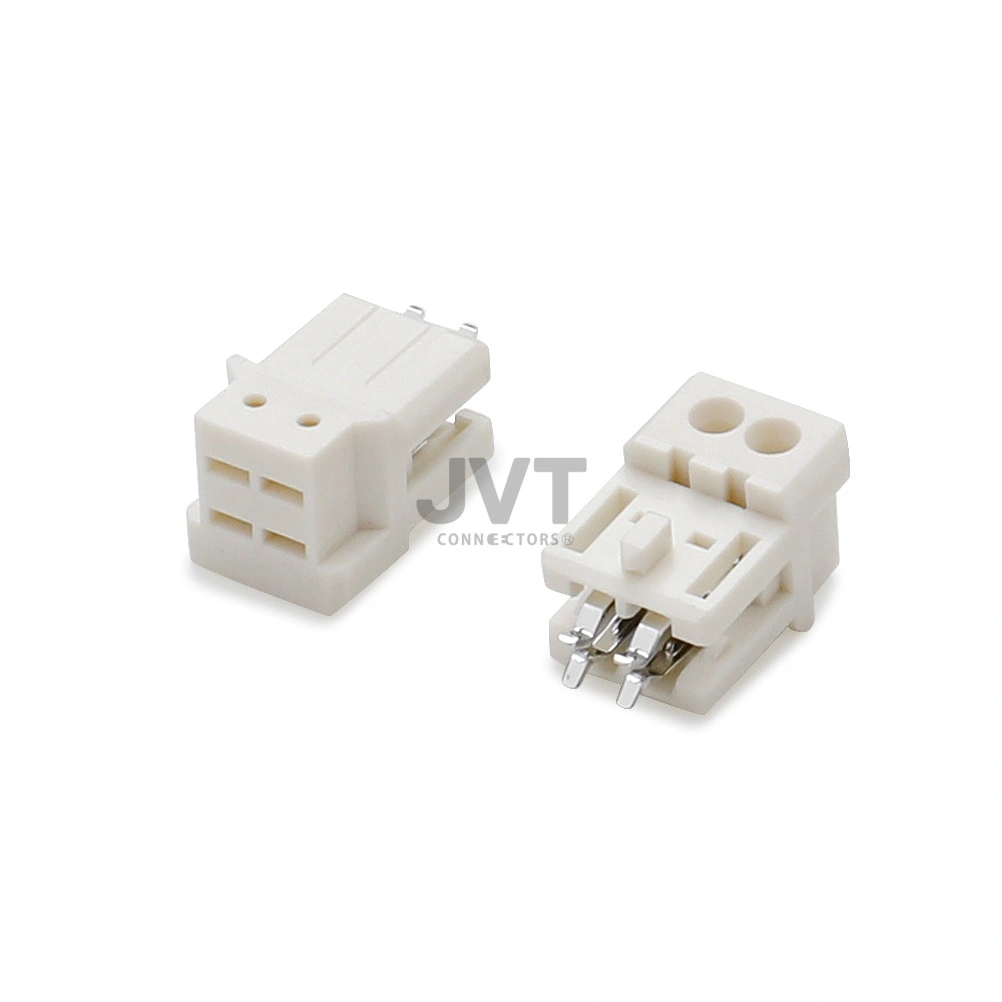
IDC Connector Buying Guide: Types, Applications, and Key Features
Expert insights into Insulation Displacement Connection technology for modern electronics.
The IDC Connector (Insulation Displacement Connector) has become a cornerstone of modern electrical engineering, providing a highly efficient and reliable method for terminating multi-core ribbon cables. Unlike traditional crimping or soldering methods, the IDC Connector utilizes a specialized cold-welding process where a sharp blade pierces the cable insulation to make direct contact with the conductor. This technology, pioneered for high-speed assembly, significantly reduces labor costs and human error in manufacturing environments. For engineers and procurement specialists working with PCB designs, understanding the nuances of these components is vital for ensuring long-term signal integrity and system durability.
At JVT Connectors, we recognize that the selection of an interconnect solution can make or break a project. As a leading manufacturer with years of expertise, we provide high-performance solutions that adhere to global standards. This guide will walk you through the essential types, technical parameters, and application scenarios for the IDC Connector, helping you make an informed decision for your next large-scale production run or specialized industrial application.
Deep Dive into IDC Connector Technology
To appreciate the value of an IDC Connector, one must first understand its internal architecture. The core component is the "U-shaped" contact terminal. When a ribbon cable is pressed into the connector, the prongs of the U-contact pierce the insulation and slightly deform the copper conductor. This creates a gas-tight connection that is highly resistant to oxidation and vibration. This mechanical stability is the primary reason why IDC technology remains preferred in automotive and telecommunications sectors where environmental stressors are constant.
Pitch is perhaps the most critical specification. Standard pitches include 2.54mm, 2.00mm, and 1.27mm. As electronics continue to miniaturize, the demand for 1.27mm pitch connectors has surged. However, smaller pitches require tighter manufacturing tolerances to prevent short circuits. JVT Connectors utilizes advanced precision molding and automated assembly to ensure that every IDC Connector meets strict dimensional accuracy, even at the highest density configurations.
Furthermore, the housing material plays a significant role. High-grade thermoplastics like PBT or LCP (Liquid Crystal Polymer) are often used because of their excellent thermal stability and insulation properties. These materials ensure that the connector can withstand the heat of reflow soldering or harsh operating environments without warping. By selecting a high-quality IDC Connector, manufacturers can ensure that their products maintain electrical continuity throughout their entire lifecycle.
Understanding the Different Types of IDC Connectors
Not all IDC systems are created equal. Depending on the PCB layout and the required signal density, different form factors must be considered. Below are the most common variants found in industrial applications:
- IDC Socket Connectors: These are the female headers designed to mate with male pin headers. They usually feature a central polarizing bump to prevent incorrect insertion, a critical feature for high-reliability systems.
- IDC Transition Connectors: Instead of mating with a header, these are soldered directly to the PCB. They are ideal for permanent cable-to-board connections where cost-saving is more important than modularity.
- D-Sub IDC Connectors: These combine the ruggedness of a D-Subminiature interface with the fast assembly of IDC technology. Often used in serial communication and industrial robotics.
- DIP Plug Connectors: These allow a ribbon cable to be plugged directly into a standard IC socket on a PCB, facilitating easy testing and firmware updates in legacy systems.
When choosing between these types, designers must evaluate the mating cycle requirements. If the cable will be frequently unplugged, a socket with a strain relief clip is mandatory. Without strain relief, the repetitive force applied to the ribbon cable can lead to micro-fractures in the contact area, eventually causing intermittent signal loss. JVT offers a variety of strain relief options for its IDC Connector lines to address these specific durability concerns.
Key Applications of IDC Connectors in Modern Industry
The versatility of the IDC Connector allows it to serve multiple sectors. In industrial automation, these connectors link PLC units to sensors and actuators. The ability to mass-terminate 40 or 50 wires in a single press saves hours of manual labor during the installation of complex machinery. This efficiency is why many of our clients at JVT Connectors choose our IDC series for their smart factory initiatives.
In the consumer electronics market, IDC technology is frequently found inside large home appliances and gaming consoles. It provides a low-profile way to connect internal displays or control panels to the main logic board. In these applications, cost-efficiency and space-saving are the primary drivers. Our JVT2542 series is particularly popular here due to its compact design and reliable performance.
The telecommunications and data storage industries also rely heavily on IDC systems. From old IDE hard drive cables to modern server rack backplanes, the need for parallel data transmission over short distances is efficiently met by ribbon cables and IDC headers. The low contact resistance and high signal integrity of these connectors make them ideal for the fast-paced world of data centers.
Key Features and Technical Considerations
Technical specifications go beyond just the physical dimensions. To ensure you are buying a high-quality IDC Connector, consider the following technical features:
Contact Plating
Gold plating is preferred for high-signal integrity, while tin-lead or pure tin plating is cost-effective for general-purpose applications. JVT provides various plating thicknesses to balance cost and conductivity.
Current Rating
Typical ratings for a 2.54mm IDC range from 1A to 3A per pin. It is essential to ensure the connector can handle the peak current without excessive temperature rise.
Flammability Rating
Safety is paramount. Look for UL94V-0 certified housings, which provide high resistance to fire and ensure compliance with international safety standards.
Operating Temperature
A standard IDC Connector should operate reliably between -40°C and +105°C, making them suitable for both outdoor equipment and high-heat industrial environments.
Strategic Procurement Advice
Procuring the right components requires a balance between performance, lead time, and cost. When evaluating an IDC Connector supplier, look for evidence of consistent quality control. At JVT Connectors, we employ automated optical inspection (AOI) to detect any contact misalignment before parts leave our facility. This reduces the risk of "dead on arrival" components which can stall your assembly line.
It is also wise to consider the total cost of ownership. A slightly more expensive connector with superior plating and a reliable strain relief clip can save thousands of dollars in warranty claims and field repairs. Furthermore, ensure that the supplier can provide customized solutions. Sometimes, a standard off-the-shelf part doesn't fit a unique PCB layout. JVT specializes in ODM and OEM services, allowing us to tweak terminal lengths or housing dimensions to meet your specific requirements.
About JVT Connectors
Dongguan Qiaoye Electronics (JVT Connectors) is a national high-tech enterprise specializing in the R&D, manufacturing, and distribution of precision interconnect systems. With a factory spanning thousands of square meters and a commitment to quality (ISO9001, IATF16949), we have become a trusted partner for global electronics brands. Our advantage lies in our vertical integration—from mold design to final assembly—ensuring competitive pricing without sacrificing reliability.
Explore our full range of IDC Connector solutions or contact our technical team for custom project support.
Frequently Asked Questions
Q1: What are the primary benefits of using an IDC Connector over traditional crimp terminals?
The main advantage of an IDC Connector is the speed of assembly. Multiple wires are terminated simultaneously without the need for stripping, soldering, or individual crimping. This reduces labor time by up to 80% and ensures a uniform, gas-tight connection across all contacts.
Q2: Can a ribbon cable be reused with a new IDC Connector?
Generally, it is not recommended to reuse the exact same spot on a ribbon cable. Once the insulation is pierced by an IDC Connector, the physical integrity of the cable is altered. If reuse is necessary, you should cut off the used section and terminate a fresh end of the cable.
Q3: How do I select the correct wire gauge for my IDC Connector?
Most IDC systems are designed for 28 AWG or 26 AWG stranded ribbon cables. Using a wire gauge that is too large or too small will result in a poor connection. Always consult the datasheet of your specific IDC Connector to confirm the compatible AWG range.
Q4: Are there waterproof versions of the IDC Connector?
While standard IDC systems are for internal PCB use, there are specialized waterproof IDC Connector solutions available for outdoor or automotive use. These usually feature silicone seals or gel-filled housings to protect the contact points from moisture ingress.
Q5: What assembly tools are required for a professional IDC Connector termination?
For high-quality results, a dedicated IDC hand press or bench-top pneumatic press is required. These tools ensure that the pressure applied to the IDC Connector is perfectly vertical and even, preventing bent pins or incomplete insulation piercing.
Choosing the right IDC Connector is a strategic decision that impacts the reliability, cost, and lifespan of your electronic device. With JVT Connectors, you gain a partner dedicated to technical excellence and manufacturing precision.