

How to Install a Wire to Wire Connector Safely and Efficiently
In the intricate world of electrical engineering and industrial manufacturing, the reliability of a connection defines the success of the entire system. A Wire to Wire Connector serves as the critical bridge between different harness segments, ensuring signal integrity and power distribution across diverse applications. At JVT Connectors, we understand that even the most robust connector requires precise installation to reach its full potential. This comprehensive guide explores the technical nuances of installing these components, focusing on safety protocols, efficiency, and the professional standards required for high-performance electronics.
The Fundamentals of Wire to Wire Connector Preparation
Successful installation begins long before the actual mating of the parts. The preparation phase is where the foundation for electrical safety is laid. First, technicians must identify the specific requirements of the Wire to Wire Connector being used, such as the pitch size and current rating. For instance, a 1.25mm pitch connector requires different handling than a heavy-duty 4.20mm pitch variant. Selecting the correct wire gauge (AWG) is paramount; if the wire is too thick, it will not fit the terminal, and if it is too thin, the crimp will lack the necessary mechanical strength, leading to potential arcing or disconnection.
Insulation stripping is the next critical step. Using high-precision tools is essential to remove the outer jacket without nicking the copper strands. Any damage to the internal conductors reduces the cross-sectional area, which can cause localized overheating under load. Professionals often recommend stripping just enough insulation so that the wire rests perfectly within the terminal's grip. JVT Connectors provides detailed specifications for our Wire to Wire Crimp Style series to help engineers match their wire processing equipment to our high-quality terminals. Proper preparation ensures that the subsequent crimping process achieves maximum conductivity and environmental resistance.
Executing the Perfect Crimp and Terminal Insertion
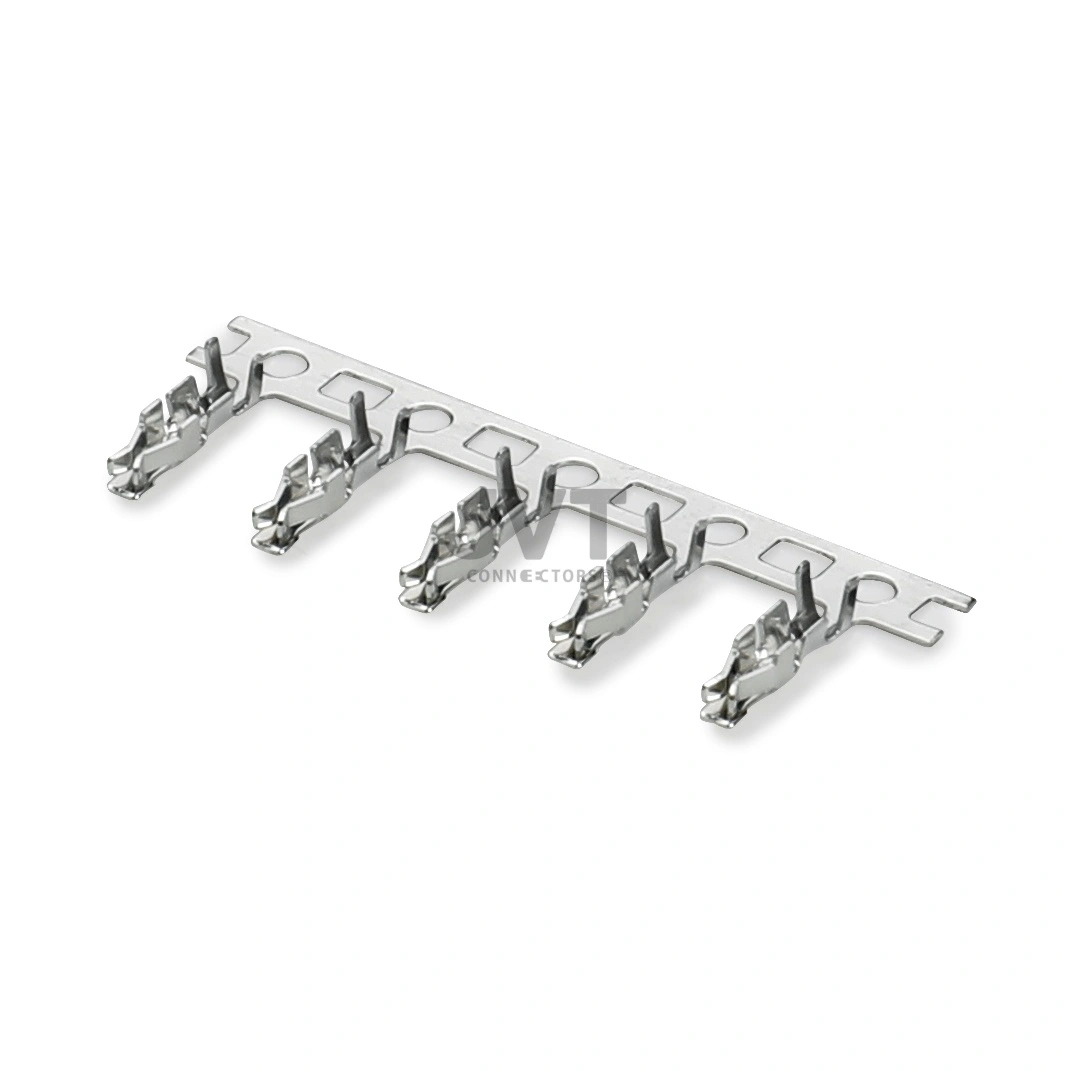
Crimping is both an art and a science. When installing a Wire to Wire Connector, the quality of the crimp determines the mechanical longevity of the connection. A professional crimp creates a gas-tight seal between the wire and the terminal, preventing oxidation and maintaining low contact resistance. It is vital to use the applicator or hand tool specifically designed for the terminal's geometry. Over-crimping can fracture the terminal material, while under-crimping allows the wire to pull out under vibration.
Once the terminals are correctly crimped, the insertion process begins. Each terminal must be oriented correctly according to the housing design. You should feel or hear a distinct click, which indicates that the locking lance has engaged with the housing. This prevent "terminal back-out," a common failure where the pin is pushed out of the housing during mating. For multi-circuit connectors, such as our 2.00mm Pitch Wire to Wire series, maintaining the correct wiring sequence is essential to avoid cross-wiring. Following a standardized color-coding system or using labeled harnesses can significantly increase assembly efficiency and reduce human error during high-volume production runs.
Ensuring Mechanical Stability and Environmental Protection
Safety in a Wire to Wire Connector installation is not just about the electrical path; it is also about mechanical security. Most modern connectors feature positive locking mechanisms. When mating the male and female housings, ensure that the latches are fully engaged. A loose connection can create intermittent signals, which are notoriously difficult to diagnose in complex systems. Furthermore, strain relief should be implemented to ensure that external tension on the wires does not transfer to the delicate contact points within the housing.
Environmental factors also play a huge role. If the application involves high humidity or exposure to dust, utilizing a sealed Wire to Wire Connector is necessary. These systems often include silicone seals and back-shells to maintain an IP-rated barrier. At JVT Connectors, we specialize in high-reliability solutions that withstand vibration and thermal cycling. For engineers looking to replace expensive imported brands, our localization substitution strategy offers high-performance alternatives that meet international safety standards while optimizing project costs. Always perform a final pull test and visual inspection to ensure no wires are strained and all housings are flush.
Why Choose JVT Connectors for Your Connectivity Solutions
As a national specialized and innovative enterprise, JVT Connectors (Dongguan Qiaoye Electronics Co., Ltd.) has dedicated over a decade to the research, development, and manufacturing of precision interconnect solutions. Our strength lies in our comprehensive supply chain, from mold design and high-speed stamping to automated assembly and rigorous testing. We offer an extensive range of products, including Wire to Board, Board to Board, and our renowned Wire to Wire Connector series, designed to meet the rigorous demands of the automotive, industrial, and consumer electronics sectors.
Our commitment to quality is backed by our status as a National High-Tech Enterprise and our participation in global exhibitions like the Munich Shanghai Electronics Show. We provide more than just components; we provide strategic advantages through our About JVT and technical support teams. By choosing JVT, you are partnering with a manufacturer that prioritizes durability, precision, and customer-centric innovation. Whether you need custom solutions for new energy vehicles or reliable connections for smart home appliances, our team is ready to deliver. You can reach out to us via our Contact Page for specialized consulting and samples.
Frequently Asked Questions
Q1: How do I select the right pitch for a Wire to Wire Connector?
Selecting the right pitch depends on your space constraints and voltage requirements. Smaller pitches like 1.00mm are ideal for compact electronics, while larger pitches like 4.20mm are better for power applications where higher current and creepage distances are required. JVT Connectors offers a wide variety of pitches to suit every design need.
Q2: Can I reuse a Wire to Wire Connector housing after removing a terminal?
Generally, it is possible if the housing's locking tab hasn't been damaged during extraction. However, for critical safety applications, we recommend using a new Wire to Wire Connector housing to ensure the terminal retention force remains within the original specification. Always use proper extraction tools to prevent internal damage.
Q3: What are the signs of a poor Wire to Wire Connector installation?
Common signs include visible gaps between mated housings, terminals that wiggle or push back when touched, and localized discoloration due to heat. If a Wire to Wire Connector feels warm to the touch during operation, it usually indicates high contact resistance caused by a poor crimp or loose mating.
Q4: Are JVT Connectors compatible with standard industry crimping tools?
Our terminals are designed to follow international standards, making them compatible with many high-quality industry applicators. However, for the best performance and to guarantee the integrity of your Wire to Wire Connector, we recommend using JVT-approved tooling designed specifically for our terminal geometries.
Q5: How does a Wire to Wire Connector handle high-vibration environments?
In high-vibration scenarios, a Wire to Wire Connector must have a secondary locking feature, such as a TPA (Terminal Position Assurance) or a robust friction lock. These features ensure that the connection stays secure even under mechanical stress, which is why JVT parts are widely used in automotive and industrial robotics.
Copyright © 2025 JVT Connectors (Dongguan Qiaoye Electronics Co., Ltd.). All Rights Reserved. Reliable Connectivity Solutions.