

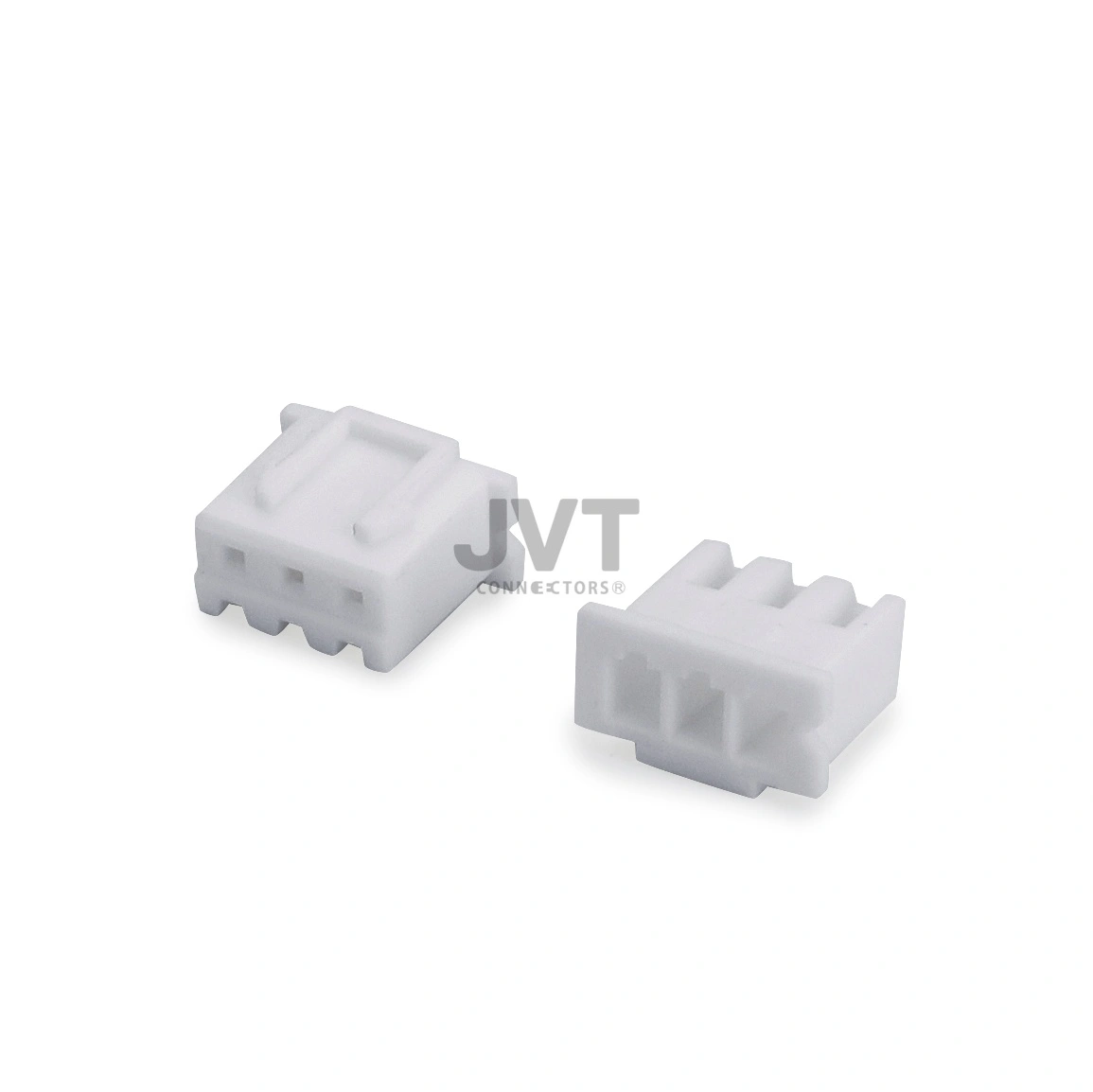
What Is a Wire to Wire Connector and How Does It Work
A comprehensive technical guide into the mechanics, applications, and strategic selection of high-performance wire-to-wire connectivity solutions.
Introduction to Modern Connectivity
In the complex landscape of electrical engineering and industrial design, the ability to maintain a stable and secure electrical path between two independent cable assemblies is paramount. This is where the Wire to Wire Connector plays a critical role. At its simplest level, a Wire to Wire Connector is an electromechanical device designed to join two wire-terminated cables together. Unlike wire-to-board connectors that interface directly with a PCB, these components allow for modularity and flexibility in cabling systems, enabling easier maintenance, assembly, and field repairs in environments ranging from automotive engines to consumer white goods.
JVT Connectors has spent decades refining the precision of these components. By focusing on the structural integrity of the housing and the conductivity of the terminals, we ensure that every connection is resistant to vibration, thermal cycling, and mechanical stress. Understanding how a Wire to Wire Connector functions requires a deep dive into its internal architecture, specifically the interplay between the male (plug) and female (receptacle) components and the crimping technology that secures the wire to the terminal.
The Mechanical Principles: How It Works
The operational logic of a Wire to Wire Connector is centered on the principle of mechanical mating and electrical continuity. The process begins with crimping, where a metal terminal is compressed onto a stripped wire. This cold-welding process ensures a gas-tight connection that minimizes resistance. Once the terminals are inserted into their respective plastic housings, they are locked in place by lances or retainers. When the male plug and female receptacle are joined, the terminals make physical contact, completing the circuit.
One of the most critical aspects of how a Wire to Wire Connector works is the locking mechanism. High-quality connectors from JVT Connectors often feature positive locks, which provide an audible "click" when the parts are fully seated. This prevents accidental disconnection due to external pulling forces or high-vibration environments. Furthermore, modern designs incorporate Terminal Position Assurance (TPA) and Connector Position Assurance (CPA) features. These secondary locks ensure that the terminals are correctly oriented and the housings are fully mated, eliminating the risk of partial contact which could lead to overheating or signal intermittent failure.
Beyond the simple transmission of current, these connectors are engineered for signal integrity. In data-sensitive applications, the geometry of the contact area is optimized to maintain consistent impedance. For power applications, the surface area of the terminal contact is maximized to handle high amperage without significant heat dissipation. This dual capability makes the Wire to Wire Connector an indispensable tool in the modern electronic ecosystem, bridging the gap between various modules of a machine or vehicle.
Diversification in Pitch and Specification
The versatility of a Wire to Wire Connector is often defined by its "pitch"—the distance between the center of one terminal and the center of the next. JVT Connectors offers an extensive range of pitch options to suit different space and power requirements. Smaller pitches, such as the 1.00mm or 1.25mm series, are designed for compact consumer electronics where space is at a premium but reliability cannot be compromised. These micro-connectors require high-precision injection molding and specialized crimping tools to ensure that the delicate terminals remain protected within the housing.
As we move into industrial and automotive sectors, larger pitches like 3.00mm, 4.20mm, and 6.35mm become standard. For example, our 4.20mm pitch series is widely utilized in power supply units due to its robust current-carrying capacity. These larger connectors often feature thicker walls for better insulation and more aggressive locking tabs to survive harsh handling. The choice of pitch is a strategic decision that balances the total current load with the physical footprint available in the device design.
Small Pitch Solutions
Ideal for handheld devices and drones. Focuses on lightweight materials and high-density pin counts. Common examples include 0.60mm to 1.50mm pitch connectors.
Large Pitch Solutions
Built for industrial machinery and automotive wire harnesses. Focuses on durability and high voltage isolation. Common examples include 3.96mm to 6.35mm pitch connectors.
Industry-Specific Applications
Every industry has unique demands for connectivity. In the automotive sector, a Wire to Wire Connector must withstand extreme temperature fluctuations from -40°C to +125°C. JVT Connectors provides specialized solutions for vehicle lighting, sensors, and infotainment systems where vibration resistance is non-negotiable. Our connectors are tested against stringent salt spray and thermal shock protocols to ensure they do not corrode over the lifespan of the vehicle.
In the realm of New Energy and Lithium Battery systems, safety is the primary concern. Connectors in these systems must manage high-current discharge while providing foolproof locking to prevent sparks or shorts. The modular nature of wire-to-wire systems allows battery packs to be easily connected and disconnected during the manufacturing and recycling processes. By using high-grade UL94V-0 rated plastics, JVT ensures that our connectors provide the necessary flame retardancy required for modern battery safety standards.
Furthermore, the home appliance industry relies heavily on these connectors for internal wiring harnesses. From refrigerators to washing machines, the Wire to Wire Connector facilitates the connection between user interface panels and main control boards. In these applications, moisture resistance and ease of manual assembly (ergonomics) are the key value drivers. JVT’s designs prioritize low insertion force, which reduces operator fatigue during high-volume assembly line production.
Why Choose JVT Connectors
As a leading Wire to Wire Connector manufacturer, JVT Connectors (Dongguan Qiaoye Electronics Co., Ltd.) stands at the forefront of the interconnect industry. We are recognized as a National High-Tech Enterprise and a "Specialized and Innovative" enterprise in China. Our strength lies in our comprehensive vertical integration, from precision mold design to automated assembly. We don't just sell components; we provide engineered solutions that solve the specific connectivity challenges of our global partners.
Our advantages include:
R&D Excellence: Rapid prototyping and custom mold development for unique application needs.
Certified Quality: Our products meet ISO9001, IATF16949, and UL standards.
Global Supply Chain: Reliable lead times and localized support for international OEMs.
Discover more about our expertise and explore our full range of products at the following links:
Frequently Asked Questions
Q1: What are the main components of a Wire to Wire Connector assembly?
A standard assembly consists of four primary parts: the male housing (plug), the female housing (receptacle), the male terminals, and the female terminals. In some high-reliability applications, additional components like seals for waterproofing or TPA (Terminal Position Assurance) retainers are included to ensure the connector performs correctly under stress.
Q2: How do I choose the right pitch for my Wire to Wire Connector?
Choosing the pitch depends on your electrical load and space constraints. Smaller pitches (under 2.00mm) are used for signal transmission in small devices. Larger pitches (3.00mm to 6.35mm) are necessary for power distribution where high voltage isolation and thicker wire gauges are required. Always consult the product datasheet for current-carrying capacity per circuit.
Q3: Is a Wire to Wire Connector waterproof?
Not all of them are. Standard versions are designed for "dry" environments. However, JVT Connectors manufactures specialized waterproof versions (IP67/IP68 rated) that utilize silicon seals and rubber grommets to prevent moisture ingress. These are essential for automotive exterior use and marine applications.
Q4: Why is crimp quality so important in a Wire to Wire Connector?
The crimp is the heart of the electrical connection. A poor crimp can lead to high resistance, which causes localized heating and eventual connector failure. Using the correct applicator and maintaining the specified crimp height ensures a durable, gas-tight connection that can withstand thousands of hours of operation.
Q5: Can I mix different brands of Wire to Wire Connector housings and terminals?
It is strongly discouraged. While many connectors may look similar or "compatible," subtle differences in tolerances, plating thickness, and locking lance geometry can lead to terminal back-out or poor electrical contact. For maximum reliability, always use a complete system from a single trusted manufacturer like JVT Connectors.
Conclusion
The Wire to Wire Connector remains a cornerstone of modern electronics, offering the modularity and reliability required by today's sophisticated systems. By understanding the mechanical principles, selecting the appropriate pitch, and partnering with a quality-focused manufacturer like JVT Connectors, engineers can ensure their designs are built to last. Whether you are working on the next generation of electric vehicles or high-precision industrial tools, the right connector is the silent partner in your success.