

Wire to Wire Connector Buying Guide: Types, Features, and Applications
In the complex world of electrical engineering and industrial design, the Wire to Wire Connector serves as the fundamental bridge for power and signal transmission. Whether you are developing a next-generation electric vehicle, a complex medical device, or a high-performance consumer appliance, the integrity of your wiring system depends entirely on the quality of these components. A Wire to Wire Connector is designed to connect two wire-terminated cables, providing a secure, detachable, and reliable interface that can withstand environmental stressors and mechanical vibrations. At JVT Connectors, we understand that a single failure in a connector can lead to catastrophic system downtime. This guide aims to provide engineers and procurement specialists with a comprehensive framework for selecting the optimal connectivity solutions for their specific project requirements.
Understanding the Fundamental Mechanics of Wire to Wire Connectors
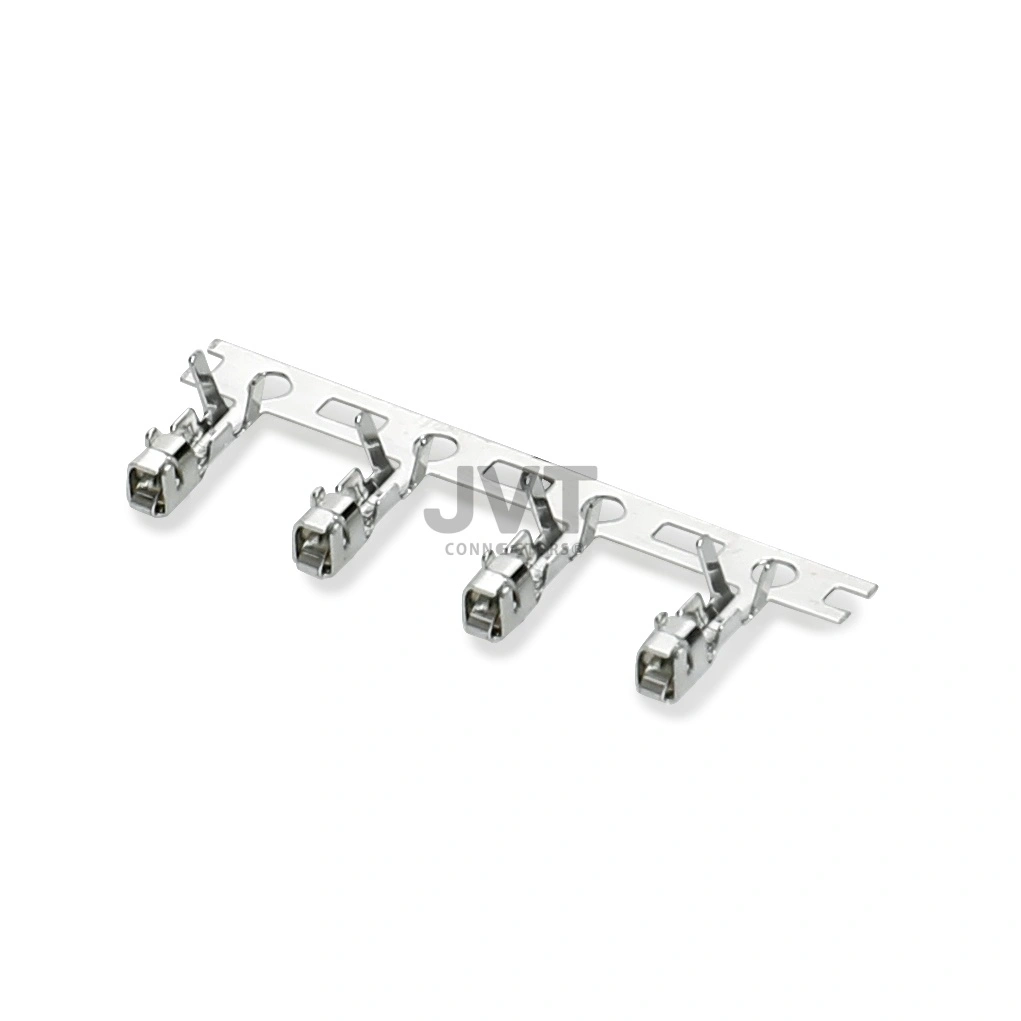
The basic architecture of a Wire to Wire Connector consists of four primary elements: the terminal, the housing, the secondary locking mechanism, and the sealing component for waterproof variants. The terminal is the heart of the connection, typically made from high-conductivity copper alloys and plated with tin or gold to prevent oxidation. The housing, usually molded from engineering plastics like Nylon 66 or PBT, provides electrical insulation and mechanical support. Modern manufacturing processes have allowed brands like JVT Connectors to achieve incredibly tight tolerances, ensuring that each terminal is perfectly aligned within the housing to prevent mismating and short circuits.
When evaluating a Wire to Wire Connector, one must consider the crimping technology used. Crimp-style connectors offer superior mechanical strength compared to soldering in high-vibration environments. The terminal is compressed around the wire strands, creating a cold-weld that is gas-tight and resistant to thermal cycling. This mechanical bond ensures that the electrical resistance remains low over the entire lifespan of the product. Furthermore, the housing design often incorporates "tpa" (Terminal Position Assurance) and "cpa" (Connector Position Assurance) features. These safety mechanisms ensure that the terminals are fully seated and that the male and female halves are locked together, preventing accidental disconnection during operation.
Classification by Pitch and Dimension
One of the most critical specifications in choosing a Wire to Wire Connector is the pitch, which refers to the distance from the center of one contact to the center of the next. Small pitch connectors, such as the 1.0mm or 1.25mm series, are essential for miniaturized electronics where space is at a premium. Conversely, larger pitch connectors like 4.20mm or 6.35mm are used for high-power applications requiring thicker gauge wires and higher current-carrying capacities. JVT Connectors offers a diverse range of pitch options to meet these varying needs, ensuring that designers do not have to compromise on either size or performance.
Micro-Pitch (1.0mm - 1.50mm): Ideal for 3C electronics and drones. Explore our 1.50mm Pitch Solutions.
Mid-Range Pitch (2.0mm - 3.0mm): Common in home appliances and industrial controls. View our 3.00mm Wire to Wire Series.
Power Pitch (4.20mm - 6.35mm): Designed for heavy machinery and power supplies. Check the 6.35mm Heavy Duty Connectors.
Choosing the wrong pitch can lead to electrical arcing if the contacts are too close for the operating voltage, or excessive bulk if the pitch is larger than necessary. For example, in lithium battery management systems, a 2.50mm pitch Wire to Wire Connector often provides the perfect balance between isolation and density. JVT has optimized these designs to ensure that even the smallest connectors maintain high dielectric strength and robust mating cycles. By standardizing on specific pitch families, manufacturers can also simplify their tooling and crimping equipment, leading to significant cost savings during mass production.
Key Features to Prioritize During Selection
Beyond pitch and terminal style, several advanced features define a high-quality Wire to Wire Connector. First is environmental sealing. In automotive and marine applications, connectors must be waterproof (IP67 or IP68 rated) to prevent corrosion. This is achieved through integrated silicone seals and specialized housing designs that keep moisture, dust, and oil away from the electrical contacts. JVT Connectors specializes in these ruggedized designs, ensuring that the electrical path remains protected even in the harshest environments. Material selection also plays a vital role; for instance, using glow-wire compliant plastics is mandatory for household appliances to meet international safety standards like IEC 60335-1.
Locking mechanisms are another critical factor. A friction-lock might suffice for a stable office environment, but an active latch or a screw-lock is necessary for industrial robotics or aerospace equipment. The audible "click" during mating provides haptic feedback to assembly line workers, confirming a secure connection and reducing human error. Furthermore, current-carrying capacity must be derated based on the number of circuits in the housing and the ambient temperature. A professional Wire to Wire Connector manufacturer like JVT provides detailed derating curves and thermal testing data to help engineers calculate the exact limits of their wiring harnesses, preventing overheating and potential fire hazards.
Why JVT Connectors is Your Strategic Partner
Dongguan Qiaoye Electronics Co., Ltd. (known globally as JVT Connectors) has established itself as a leader in the precision connector industry. Our commitment to excellence is reflected in our ISO 9001 and IATF 16949 certifications, which underscore our ability to meet the rigorous quality standards of the automotive and industrial sectors. As a "National High-Tech Enterprise," we don't just supply parts; we provide comprehensive interconnect solutions. Our R&D team works closely with clients to develop custom Wire to Wire Connector designs that solve specific spatial or environmental challenges, often replacing expensive imported brands with high-performance, localized alternatives.
Our advantages include a vertically integrated manufacturing process, from precision mold design to high-speed stamping and automated assembly. This allows us to maintain strict quality control while offering competitive lead times. Our extensive product catalog includes everything from Wire to Board Connectors to specialized Terminal Series, making JVT a one-stop-shop for global OEMs. By choosing JVT, you are gaining a partner dedicated to technical innovation, reliability, and long-term support. You can learn more about our company's journey on our About Us page or get in touch directly via our Contact Page.
Industrial Applications and Case Studies
The versatility of the Wire to Wire Connector allows it to thrive in numerous high-stakes industries. In the New Energy sector, particularly in lithium battery storage, these connectors handle the critical balance leads that monitor cell voltage. A failure here could lead to improper charging and battery degradation. In the automotive world, they are used throughout the vehicle's "nervous system," from LED lighting harnesses to sensor arrays for autonomous driving. JVT's connectors are engineered to survive the high-temperature engine bays and the constant vibrations of the chassis, providing consistent signal integrity over hundreds of thousands of miles.
In the realm of professional power tools and smart home appliances, the focus shifts to ergonomics and safety. Here, a Wire to Wire Connector must be easy to assemble on a fast-moving production line while offering protection against accidental touch (finger-safe designs). We have helped many clients transition from labor-intensive manual soldering to automated crimp-and-insert systems using our Crimp Style Wire to Wire Series. This transition typically results in a 40% reduction in assembly time and a near-zero defect rate in the field. Whether it is a small consumer device or a massive industrial cabinet, our connectors ensure that the power stays on and the data stays clean.
Conclusion: Making the Right Choice for Longevity
Selecting the right Wire to Wire Connector is more than just matching a pitch and a pin count. It is about understanding the electrical environment, mechanical stresses, and safety requirements of your end product. By focusing on high-quality materials, precision manufacturing, and robust locking mechanisms, engineers can ensure that their products perform reliably throughout their intended service life. JVT Connectors remains dedicated to pushing the boundaries of what is possible in interconnect technology, providing the "hidden heroes" that keep our modern world connected. We invite you to explore our full range of products and leverage our expertise to optimize your next design.
Frequently Asked Questions
Q1: What are the main benefits of using a crimp-style Wire to Wire Connector?
Crimp-style connectors provide high mechanical strength and excellent electrical conductivity without the thermal stress of soldering. They are ideal for high-volume automated production and offer better resistance to vibration and thermal cycling in harsh environments.
Q2: How do I determine the correct pitch for my Wire to Wire Connector?
The choice of pitch depends on the available PCB/system space, the required voltage isolation, and the wire gauge. Smaller pitches (1.0mm-1.25mm) are for signal density, while larger pitches (4.20mm+) are designed for higher current loads and safety insulation.
Q3: Can a JVT Wire to Wire Connector be used in waterproof applications?
Yes, JVT offers specialized waterproof versions of our connectors that utilize internal seals and high-grade gaskets to achieve IP67/IP68 ratings, making them suitable for automotive, marine, and outdoor IoT devices.
Q4: What materials are typically used in the housing of a Wire to Wire Connector?
Most housings are made from high-performance thermoplastics like PA66, PBT, or LCP. These materials are chosen for their excellent dielectric properties, thermal stability, and compliance with flame retardancy standards like UL94V-0.
Q5: How does JVT Connectors ensure the reliability of its Wire to Wire Connector products?
We implement rigorous testing protocols, including salt spray tests, vibration testing, insertion/withdrawal force cycling, and thermal shock analysis. Our IATF 16949 certification ensures that every connector meets the highest global quality benchmarks.